
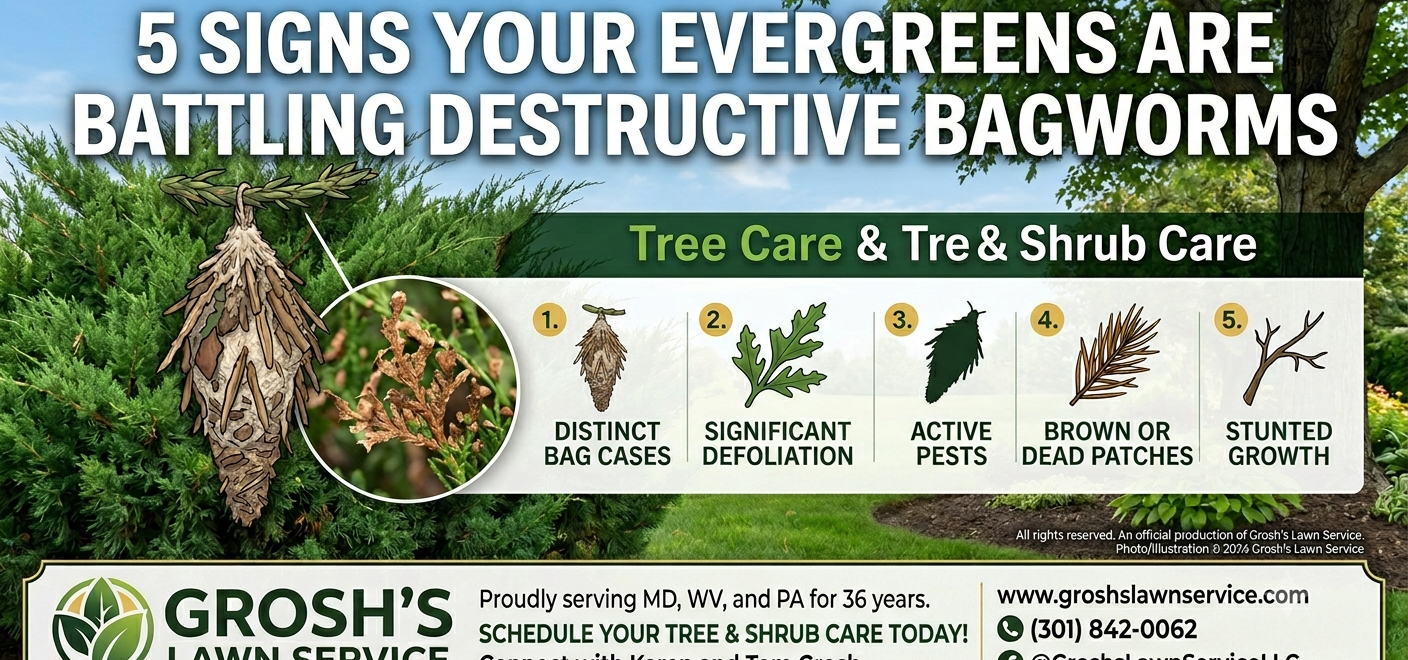
Bagworms Tree Care – Are you noticing strange, cone-shaped structures hanging from your favorite evergreen trees? You might be dealing with Bagworms. These sneaky pests can quickly turn from a minor nuisance into a major threat to the health and beauty of your landscape. If left untreated, they can strip foliage and cause significant damage to your shrubs and trees. Effective Bagworms Tree Care requires a watchful eye and a proactive approach. Bagworms are masters of disguise, weaving their protective “bags” out of the very needles and leaves they consume. By the time they become highly visible, they have often already caused substantial harm.
Understanding the Bagworm Life Cycle
To master Tree & Shrub Care, one must understand the enemy. There is one generation of bagworms per year. In late spring—typically between mid-May and mid-June—the eggs hatch inside the protective bags that have overwintered on your trees. Once they emerge, these tiny larvae begin to feed immediately, constructing their own miniature silken bags as they grow. As the summer progresses, these caterpillars feed voraciously. They expand their bags by incorporating bits of twigs and leaves from the host plant, making them blend in perfectly with their surroundings. This camouflage is why homeowners often fail to notice them until the damage is already severe.
5 Telltale Signs of an Infestation
Detecting an infestation early is the most critical factor in successful management. Keep an eye out for these five indicators:
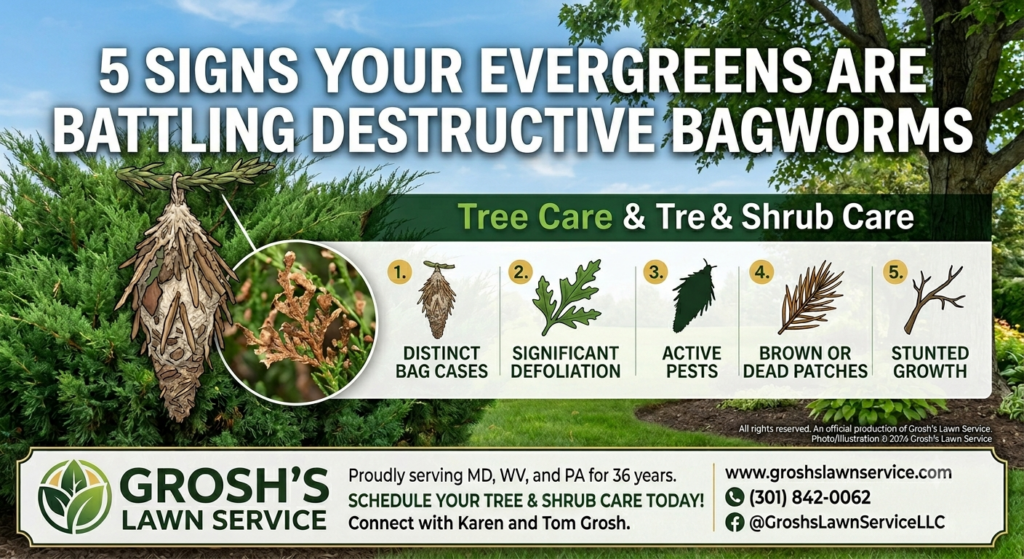
- Distinct Bag Cases: You may spot spindle-shaped cocoons hanging from branches that look like small pinecones or dried leaves. These structures are often mistaken for naturally occurring tree debris, but they are actually the primary habitat for the developing larvae. Inspecting your trees for these anomalies is the first step in effective Bagworms Tree Care.
- Significant Defoliation: As feeding progresses, you will notice patches of your evergreen becoming thin, particularly near the top of the canopy. The larvae begin at the top of the tree and work their way down, consuming the youngest and most nutritious growth first. Once the foliage is gone, the structural integrity of the tree begins to suffer.
- Active Pests: If you look closely at the bags, you may see the head of a small caterpillar protruding as it feeds. This activity is a clear indicator that the population is actively consuming your landscape. Early intervention is essential to prevent the larvae from reaching maturity and laying eggs for the following year.
- Brown or Dead Patches: Evergreens often exhibit “bronzing”—where needles turn brown and die—as a direct result of feeding. Unlike deciduous trees, evergreens cannot easily push out new growth to replace what is lost. This damage can be permanent, leaving unsightly gaps that ruin the symmetry and density of your hedges and ornamental trees.
- Stunted Growth: Heavy infestations drain the plant’s energy, leading to overall poor health and stunted development. When a tree is constantly fighting off a pest invasion, it lacks the resources to thrive. Proper Tree & Shrub Care ensures that your plants have the vitality required to withstand seasonal stressors and remain vigorous year-round.
The Science of Tree Stress and Resilience
Evergreens in our region, such as Leyland Cypress, Arborvitae, and various Spruce species, rely on consistent nutrient uptake to maintain their deep green color and density. When bagworms infest these plants, they force the tree into a state of chronic stress. This physiological strain makes the plant susceptible to secondary issues like fungal infections, drought, and winter damage.

At Grosh’s Lawn Service, we view Bagworms Tree Care as part of a wider ecosystem management strategy. A tree that is properly watered, mulched, and nourished through our professional Lawn Care Treatments is significantly more resilient. Healthy trees produce better chemical defenses against feeding insects. By maintaining the soil quality and hydration levels, we help your landscape defend itself naturally, while our targeted Tree & Shrub Care programs eliminate the primary threats.
Regional Environmental Factors
The specific climate of Maryland, West Virginia, and Pennsylvania plays a significant role in pest activity. Our unique mix of high spring humidity and erratic temperature fluctuations can accelerate the hatching cycle of bagworms. Furthermore, these regional conditions often mean that by the time a homeowner notices the “bags,” the larvae have already reached a size where they are more resistant to minor treatments. Consequently, having a professional team that monitors the local phenological indicators—such as the blooming of local dogwoods or lilacs—is essential for timing intervention perfectly.
The “Invisible” Ballooning Process
Many homeowners are surprised to find bagworms on trees that were previously healthy. This is due to a process known as “ballooning.” When larvae hatch, they release a fine, silken thread that catches the breeze, allowing them to drift from tree to tree, sometimes traveling significant distances across a property. Even if your neighbor has an infestation and you do not, the wind can transport these pests directly to your doorstep. This is why we recommend consistent, routine inspections for all our clients throughout the summer months.
Professional Equipment and Precision Application
Effective Tree & Shrub Care often requires more than just a standard spray bottle. Mature evergreens can reach significant heights, making it difficult for the average homeowner to achieve thorough coverage. Our team utilizes specialized equipment designed to reach the highest branches where bagworms are most active. Furthermore, we apply treatments at the precise density required to ensure the foliage is protected without overloading the plant or wasting resources. This precision is the hallmark of a professional service that has been perfecting its craft for 36 years.
Why Professional Care Matters
Many homeowners attempt DIY removal, but this is often inefficient. Hand-picking is only truly effective for small plants or light, localized infestations. If you miss even a few bags, you are essentially leaving the next generation behind to start the cycle all over again. Professional Tree & Shrub Care involves identifying the exact stage of the bagworm’s development to ensure treatment is applied when it is most effective—typically while the larvae are still small.
Using improper products or timing applications incorrectly can lead to ineffective results. Our science-based approach ensures we provide the best possible protection for your valuable greenery without harming the beneficial ecosystem of your yard. We are proud to provide expert services to our neighbors in MD, WV, and PA with 36 years of experience.
Integrated Pest Management
At Grosh’s Lawn Service, we believe in a comprehensive approach to Tree & Shrub Care. We monitor your landscape throughout the critical spring and summer months to catch infestations before they spread. While biological controls can be excellent for younger, smaller caterpillars, larger infestations may require targeted, professional-grade treatments to curb damage.
We take pride in our 36 years of experience serving Maryland, West Virginia, and Pennsylvania. We understand that every property is unique, and our customized lawn care treatments are designed to keep your specific trees and shrubs thriving. Protecting your property from pests is an investment in your home’s curb appeal and long-term value.
Prevention vs. Reactive Treatment
Investing in routine Bagworms Tree Care is always more cost-effective than replacing a mature, damaged tree. A mature evergreen takes years, sometimes decades, to reach its full size and beauty. Losing these trees to an infestation that could have been managed early on is a significant loss to your property value. By choosing proactive care, you are protecting your long-term investment.

Frequently Asked Questions
- When should I treat for bagworms? The best window is late May through June, when the larvae have just hatched and are highly susceptible to treatment.
- Can I remove the bags manually? Yes, hand-picking in the winter or early spring can help reduce the population for the following year. Always destroy the bags by placing them in soapy water or a sealed bag.
- Will my tree recover? Deciduous trees may recover, but evergreens that have been severely defoliated face a much higher risk of permanent damage or death. Early detection is key.
- How do bagworms travel to my yard? Larvae can “balloon” on silken threads, catching the wind to reach new host plants. Birds and wildlife can also inadvertently transport them.
- Are there natural predators? While some birds and predatory insects may feed on them, they are rarely enough to stop a large-scale infestation on their own.
See What Our Clients Say: https://www.groshslawnservice.com/best-lawn-service-reviews/
Visit our website at: https://www.groshslawnservice.com/
Read Our Latest Lawn Care Tips: https://groshslawnservice.blogspot.com/
Connect With Our Community: https://www.facebook.com/GroshsLawnServiceLLC
Visit our lawn care treatment page at: https://www.groshslawnservice.com/lawn-care-treatments/
Protect your landscape from bagworms with professional care. These pests can quickly strip foliage from your evergreens, leading to permanent damage. Our expert Tree & Shrub Care services, serving MD, WV, and PA for 36 years, ensure your landscape stays healthy and vibrant. Don’t let bagworms ruin your curb appeal. Contact Karen and Tom Grosh at Grosh’s Lawn Service today to schedule your custom treatment program. Let us keep your trees thriving. All rights reserved.
Contact Karen and Tom Grosh today at https://www.groshslawnservice.com/contact-us/ to schedule your lawn care treatment program. 📞

All rights reserved. An official production of Grosh’s Lawn Service.