


What Are Lawn Grubs?
Most homeowners don’t realize they have lawn grubs until the damage is already visible. These small, white, C-shaped larvae live beneath the soil, where they feed on the roots of healthy grass. As they grow, they weaken the root system, making it difficult for your lawn to absorb water and nutrients.
Grub damage in lawns often begins long before brown patches appear on the surface. By late summer or early fall, affected areas may become thin, wilted, or turn brown, even when the lawn has been watered. In more severe cases, the damaged turf can be lifted from the ground like a loose carpet because the roots have been eaten away.
While several beetle species produce grubs, Japanese beetles are among the most common in our region. Not every lawn will experience grub problems every year, but knowing what to look for can help you catch an issue early and prevent more extensive damage.
At Grosh’s Lawn Service, we help homeowners throughout Maryland, Pennsylvania, and West Virginia recognize the early warning signs of lawn problems so they can make informed decisions about their property’s care.
1. Brown Patches That Don’t Improve With Watering
One of the earliest signs of grub damage in lawns is the appearance of brown patches that continue to spread even after the lawn receives adequate rainfall or watering. Because lawn grubs feed on the roots beneath the soil, the grass can no longer absorb the moisture and nutrients it needs to stay healthy.
At first, these patches may resemble drought stress or heat damage. However, if the surrounding lawn remains green while certain areas continue to decline, it’s worth taking a closer look beneath the surface.
Healthy grass has a strong root system that anchors it firmly to the soil. Grass damaged by grubs becomes weak because many of those roots have been eaten away. As a result, the affected turf may feel spongy underfoot and will struggle to recover, even with proper watering.
Catching grub damage early can help prevent larger sections of your lawn from being affected later in the season.
2. Grass That Pulls Up Like a Loose Carpet
One of the clearest indicators of lawn grubs is grass that lifts easily from the soil with very little effort. As grubs feed on the roots, they weaken the connection between the turf and the ground until the grass is no longer firmly anchored.
Try gently pulling on a small section of suspicious turf. Healthy grass should resist because of its strong root system. If the sod peels back like a loose carpet, exposing little or no healthy roots, grub damage in lawns may be the cause.
Once the turf is lifted, inspect the top few inches of soil. You may find white, C-shaped grubs curled beneath the surface. While finding an occasional grub is normal, a high concentration in one area can lead to significant root damage and declining turf.
Identifying this problem early gives homeowners a better opportunity to determine the most appropriate course of action before larger sections of the lawn are affected.
3. Increased Activity From Birds, Skunks, or Raccoons
Sometimes the first sign of grub damage in lawns isn’t the grass itself—it’s the wildlife. Birds, skunks, raccoons, and other animals are naturally attracted to lawn grubs because they provide an easy food source.
If you notice small holes, overturned patches of turf, or areas that appear to have been scratched overnight, wildlife may be searching for grubs beneath the surface. While a few peck marks from birds are common, widespread digging or torn-up grass often signals a larger grub population.
It’s important to remember that wildlife activity alone doesn’t guarantee a grub problem. Animals may also be searching for earthworms or other insects. However, when digging is combined with brown patches or grass that lifts easily from the soil, it’s a good idea to inspect the root zone for grubs.
Recognizing these warning signs early can help homeowners address the underlying issue before both the grubs and the wildlife cause more extensive lawn damage.

4. A Spongy Feel When You Walk Across the Lawn
A healthy lawn feels firm under your feet because its roots are securely anchored in the soil. As lawn grubs feed on those roots, the turf begins to lose its stability, causing certain areas to feel soft or spongy when you walk across them.
This change may be subtle at first, but it often becomes more noticeable as grub populations increase. If the lawn feels unusually cushioned in one area while the surrounding grass remains firm, it’s worth inspecting the soil beneath the surface.
A spongy lawn doesn’t always mean grubs are present. Excess moisture, poor drainage, or other soil conditions can create a similar feeling. However, when a soft lawn is combined with brown patches, loose turf, or increased wildlife activity, grub damage in lawns becomes a much stronger possibility.
Checking the lawn early can help you determine the cause before the damage spreads to larger sections of your yard.
4. A Spongy Feel When You Walk Across the Lawn
A healthy lawn feels firm under your feet because its roots are securely anchored in the soil. As lawn grubs feed on those roots, the turf begins to lose its stability, causing certain areas to feel soft or spongy when you walk across them.
This change may be subtle at first, but it often becomes more noticeable as grub populations increase. If the lawn feels unusually cushioned in one area while the surrounding grass remains firm, it’s worth inspecting the soil beneath the surface.
A spongy lawn doesn’t always mean grubs are present. Excess moisture, poor drainage, or other soil conditions can create a similar feeling. However, when a soft lawn is combined with brown patches, loose turf, or increased wildlife activity, grub damage in lawns becomes a much stronger possibility.
Checking the lawn early can help you determine the cause before the damage spreads to larger sections of your yard.
6. Thinning Grass That Continues to Spread
Not all grub damage in lawns appears overnight. In many cases, the grass gradually becomes thinner as lawn grubs continue feeding on the root system beneath the surface.
You may first notice small areas where the lawn loses its rich green color or no longer grows as vigorously as the surrounding grass. Over time, these weak spots can expand into larger patches as more roots are damaged.
Because thinning grass can also result from drought, soil compaction, disease, or heavy foot traffic, it’s important to look for other warning signs before assuming grubs are the cause. Brown patches, loose turf, wildlife digging, or visible grubs beneath the soil can help confirm the problem.
Regularly walking your property and paying attention to changes in your lawn can help you catch potential issues early, making them easier to evaluate before more extensive damage develops.
7. More Beetles Around Your Property
If you’ve noticed an increase in beetles around your landscape, it may be a sign to pay closer attention to your lawn. Many beetles, including Japanese beetles, lay their eggs in healthy turf during the summer. Those eggs eventually hatch into lawn grubs, which begin feeding on the grass roots below the surface.
Seeing beetles doesn’t automatically mean you’ll have grub damage in lawns, but it does increase the likelihood that grubs may develop later in the season. Monitoring your lawn for early warning signs can help you identify potential problems before widespread damage occurs.
Keep an eye out for other symptoms, such as thinning grass, brown patches that don’t recover with watering, wildlife digging for food, or turf that pulls up easily. Looking at the whole picture is more reliable than relying on a single sign.
Understanding the connection between beetles and grubs helps homeowners stay one step ahead and make informed decisions about maintaining a healthy lawn.
7. More Beetles Around Your Property
If you’ve noticed an increase in beetles around your landscape, it may be a sign to pay closer attention to your lawn. Many beetles, including Japanese beetles, lay their eggs in healthy turf during the summer. Those eggs eventually hatch into lawn grubs, which begin feeding on the grass roots below the surface.
Seeing beetles doesn’t automatically mean you’ll have grub damage in lawns, but it does increase the likelihood that grubs may develop later in the season. Monitoring your lawn for early warning signs can help you identify potential problems before widespread damage occurs.
Keep an eye out for other symptoms, such as thinning grass, brown patches that don’t recover with watering, wildlife digging for food, or turf that pulls up easily. Looking at the whole picture is more reliable than relying on a single sign.
Understanding the connection between beetles and grubs helps homeowners stay one step ahead and make informed decisions about maintaining a healthy lawn.
Why Grub Prevention from Grosh’s Lawn Service Is the Best Protection for Your Lawn
When it comes to lawn grubs, prevention is far more effective than trying to repair the damage after it occurs. Once grubs have fed on your lawn’s root system, restoring healthy turf can take time, effort, and additional expense. That’s why a proactive approach is the best way to protect your investment.
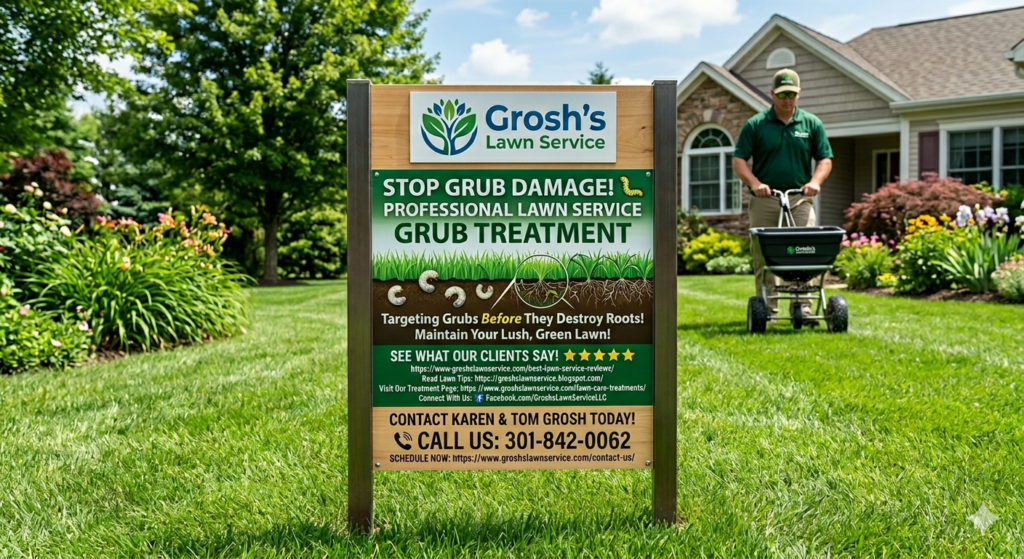
At Grosh’s Lawn Service, we apply professional grub prevention treatments at the proper time of year to help stop young grubs before they begin feeding on your grass roots. Timing is critical, and applying preventative treatments during the recommended window provides the best opportunity for season-long protection.
Preventing grub damage also helps reduce the chances of brown patches, weakened turf, and wildlife such as skunks, raccoons, and birds digging through your lawn in search of grubs. A healthy root system allows your grass to better withstand summer heat, drought, and everyday wear.
If you live in Maryland, Pennsylvania, or West Virginia, let Grosh’s Lawn Service help protect your lawn before grub damage becomes a costly problem. Preventative grub control is one of the smartest investments you can make to keep your lawn healthy, green, and beautiful throughout the growing season.
Protect Your Lawn with Confidence
Grubs may be out of sight, but the damage they cause can become very visible if left unchecked. Knowing the warning signs and investing in preventative grub control can help keep your lawn healthy, strong, and beautiful throughout the growing season.
At Grosh’s Lawn Service, we proudly provide professional lawn care and grub prevention services for homeowners across Maryland, Pennsylvania, and West Virginia. Whether you’re seeing early signs of grub activity or want to prevent problems before they begin, we’re here to help.
Contact Grosh’s Lawn Service today to schedule your grub prevention treatment and give your lawn the protection it deserves.
Ready to protect your lawn from grub damage with professional preventative treatments?
See What Our Clients Say: https://www.groshslawnservice.com/best-lawn-service-reviews/
Visit our website at: https://www.groshslawnservice.com/
Read Our Latest Lawn Care Tips: https://groshslawnservice.blogspot.com/
Connect With Our Community: https://www.facebook.com/GroshsLawnServiceLLC
Visit our lawn care treatment page at: https://www.groshslawnservice.com/lawn-care-treatments/
Contact Karen and Tom Grosh today at https://www.groshslawnservice.com/contact-us/ to schedule your lawn care treatment program and grub prevention service. 📞

Family Owned • Family Operated
Copyright. All rights reserved. An official production of Grosh’s Lawn Service.