
The safety of your family and pets is the foundation of a happy home. However, a silent threat is currently lurking in the shadows of residential landscapes across Maryland, Pennsylvania, and West Virginia. Recent data from the Centers for Disease Control and Prevention (CDC) has issued a startling warning: weekly tick-related emergency room visits have surged to their highest levels in nearly a decade. In our region alone, medical centers are reporting an influx of early tick bites—many of which are already being treated for potential Lyme disease.

At Grosh’s Lawn Service, we understand that your outdoor living space is your sanctuary. As a business rooted in Clear Spring since 1990, we have seen the evolution of the tick threat in Washington County firsthand. Without a professional tick control service, that sanctuary can quickly become a high-risk zone for Lyme disease, Alpha-gal syndrome, and other serious conditions.
1. The CDC Warning: Why the Surge Matters 📢
The CDC reports that tick-related ER visits are currently double the historic average. In the Northeast, reports show as many as 163 tick-related complaints per 100,000 visits. This spike is attributed to a “triple-digit” surge in tick activity triggered by warmer weather that has brought these parasites out of the leaf litter much earlier than usual. For those seeking backyard tick prevention, the window for early intervention is closing fast.
2. The Science of the “Questing” Tick 🧪
To understand why you need a tick control service, you must understand how ticks find you. Ticks do not jump or fly; they perform a behavior called “questing.” They climb to the tips of tall grass, weeds, and low-hanging branches, stretching out their front legs to latch onto any host that brushes past.
Because children are closer to the ground, ticks often attach to the head, neck, or behind the ears. Our specialized lawn treatment for ticks focuses on these high-traffic transition zones—the areas where your manicured lawn meets woods, ornamental beds, or tall grass.
3. Regional Threats: MD, PA, and WV 🗺️
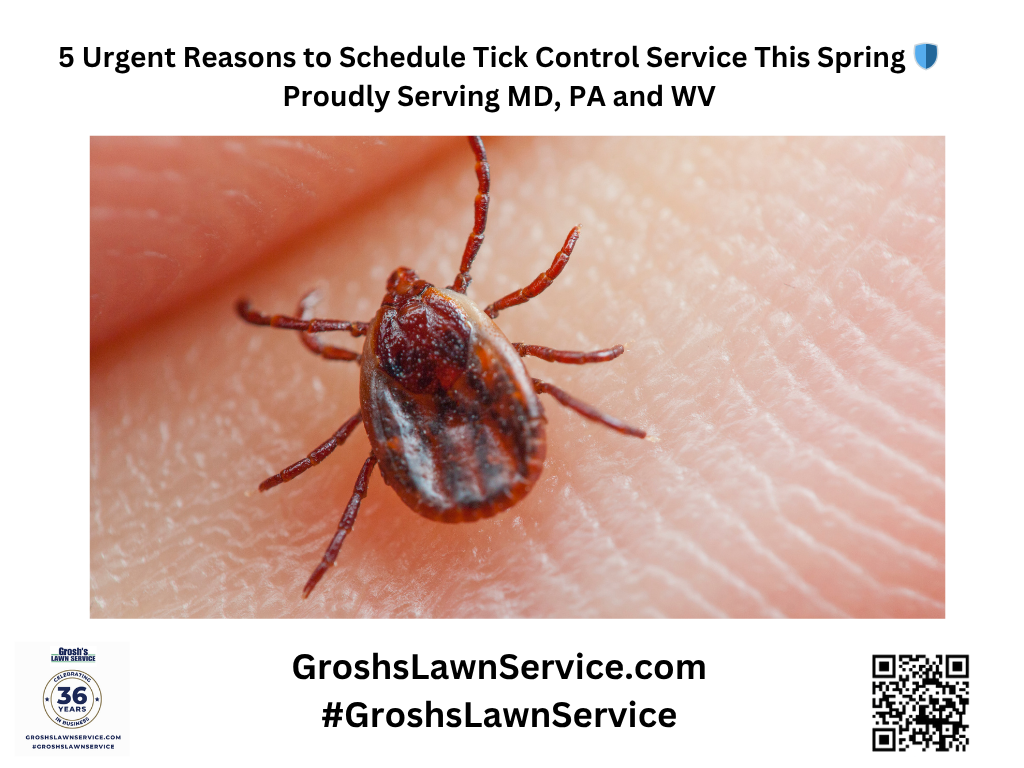
In the Tri-State area, we deal with three primary species that make backyard tick prevention a necessity:
- The Black-Legged Tick (Deer Tick): The primary carrier of Lyme disease.
- The American Dog Tick: Known to carry Rocky Mountain Spotted Fever.
- The Lone Star Tick: The primary cause of Alpha-gal Syndrome, an emerging allergic condition that can make the consumption of red meat life-threatening.
4. Integrated Tick Management (ITM) 🌳
At Grosh’s Lawn Service, our tick control service follows the University Extension ITM Guidelines. We analyze your landscape to reduce tick “harborage” sites. Ticks require high humidity to survive; they thrive in shaded, damp areas covered with leaf litter. Shaded mulch beds, stone walls, and woodpiles provide the moisture ticks need to survive the heat of the day.

5. Professional Precision vs. DIY Methods 🛠️
While hardware stores sell over-the-counter sprays, these products often lack the residual strength and specialized equipment required to reach the deep layers of thatch where ticks hide. Our team at Grosh’s Lawn Service uses professional-grade residual contact insecticides that are designed to control both adults and nymphs. This expertise allows us to time our applications perfectly with the tick life cycle.
The Comprehensive Homeowner’s Guide to Tick Biology
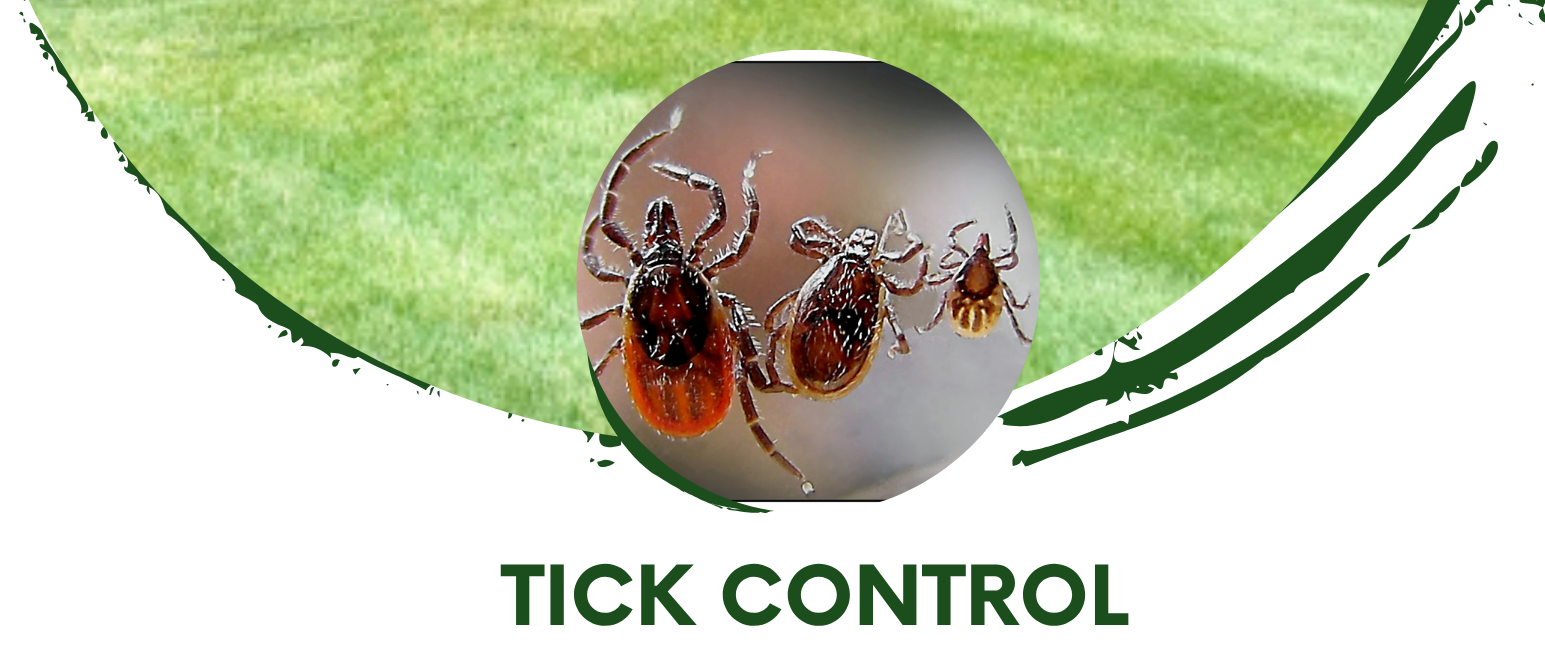
To effectively manage a threat, one must understand the enemy. Ticks are not insects; they are arachnids, more closely related to spiders and scorpions. Their life cycle consists of four stages: egg, larva, nymph, and adult.
- The Larval Stage: Often called “seed ticks,” these are the size of a grain of sand. They usually feed on small rodents like the white-footed mouse. This is where they often pick up the bacteria that cause Lyme disease.
- The Nymph Stage: This is the most dangerous stage for humans. Nymphs are about the size of a poppy seed and are responsible for the vast majority of Lyme disease transmissions because they are so difficult to detect during a “tick check.”
- The Adult Stage: Larger and easier to spot, but still capable of transmitting a wide variety of pathogens. Adult females require a large blood meal to lay their thousands of eggs.
Understanding Tick-Borne Pathogens in Our Region
The threat of a tick bite is not just about the bite itself, but the “cocktail” of bacteria and viruses they may carry.
- Lyme Disease: Caused by the bacterium Borrelia burgdorferi. Early symptoms include fever, headache, and the classic bullseye rash (erythema migrans).
- Anaplasmosis: A bacterial infection that can cause severe muscle aches and high fever.
- Babesiosis: A parasitic infection that attacks red blood cells, often compared to malaria.
- Rocky Mountain Spotted Fever: Transmitted by the American Dog Tick, this can be fatal if not treated early with the correct antibiotics.
Advanced Integrated Tick Management (ITM) Protocols
At Grosh’s Lawn Service, we don’t just “spray.” We look at your property as an ecosystem. To ensure backyard tick prevention is successful, we focus on:
- Chemical Barrier Application: We use high-pressure skid sprayers to ensure the product reaches the underside of every leaf in the brush line.
- Tick Tubes: These are biodegradable tubes stuffed with cotton treated with permethrin. Mice collect the cotton for nests, killing ticks on the mice without harming the animal.
- Host Management: By advising you on how to keep deer and mice off your property, we remove the primary transportation for ticks.
The Monthly “War Room” Prevention Calendar
- Early Spring: Adult ticks emerge as the ground thaws. Your first tick control service application is critical here to stop the first wave of egg-layers.
- Late Spring/Early Summer: This is peak nymph season. This is the most important window for protecting children and pets.
- Late Summer: While the heat slows them down, questing continues in the cool, shaded garden beds and stone walls.
- Fall: A second peak for adult ticks occurs as they prepare for winter. Professional treatment ensures they don’t find a place to overwinter near your home.
Tick-Safe Landscaping: A Detailed Checklist
Homeowners play a vital role in assistance. Here is how you can help:
- The 3-Foot Barrier: Place a 3-foot wide barrier of wood chips or gravel between your lawn and wooded areas. This creates a “dry zone” that ticks hate to cross.
- Mowing Height: Keep your grass at 3 inches. This allows more sunlight to reach the soil, drying out the humidity that ticks need to breathe.
- Clear the Clutter: Remove leaf litter, brush piles, and old wood from the perimeter of your house. These are playgrounds for the mice that carry ticks.
- Patio Placement: Keep swing sets, sandboxes, and patios in sunny areas away from the edge of the woods.
Why Choose Grosh’s Lawn Service?
Tom and Karen Grosh are not just business owners; they are members of the Clear Spring community. Tom has spent over three decades perfecting the art of lawn care and outdoor safety. We believe in providing a “neighborly” update—not a sales pitch. We know the local landscape because we live here, work here, and raise our animals here.

Comprehensive FAQ for Our Neighbors
Q: Is the tick control service safe for my dogs? A: Yes. We ask that pets stay inside during the application and for about an hour after until the product is completely dry. Once dry, it is safe for your furry family members to return to their favorite spots.
Q: Does one treatment last all year? A: No. Ticks have different activity peaks throughout the year. For the best backyard tick prevention, we recommend a seasonal program that covers the critical spring, summer, and fall windows.
Q: Will this kill the bees? A: We are very careful with our application. We focus on the “green” transition zones—wood lines and brush—and avoid flowering plants where pollinators are active.
Q: I have a vegetable garden. Can you treat near it? A: We maintain a safe buffer zone around all edible gardens to ensure your food stays pure while still protecting the surrounding lawn.
3. Safeguarding Your Family Pets 🐕 Our four-legged friends are often the first to bring ticks into the home. Even with collars or oral medications, ticks can hitch a ride on a dog’s fur and later drop off onto your furniture or carpet, where they can then find a human host. Pets are also susceptible to tick-borne illnesses that can lead to joint pain, fever, and long-term health issues. A comprehensive lawn treatment for ticks works in tandem with your pet’s veterinary care to provide a multi-layered shield of protection. 🐶
4. The Hidden Costs of Lyme Disease 🏥 Lyme disease can be a debilitating condition if not caught early. The medical costs, time away from work, and the physical toll on the body far outweigh the cost of a seasonal tick control service. Many homeowners don’t realize how difficult it can be to spot a tick, especially in its nymph stage when it is no larger than a poppy seed. By the time you notice the “bullseye” rash, the infection may already be taking hold. Professional backyard tick prevention is an investment in your long-term health and financial peace of mind. 💰
Contact Karen and Tom Grosh today at https://www.groshslawnservice.com/contact-us/ to schedule your tick lawn care services.

Visit our website at https://www.groshslawnservice.com/
Check out our 5-star lawn care reviews here: https://www.groshslawnservice.com/reviews/
#TickControl #BackyardSafety #LawnCare #GroshsLawnService #PetSafety #LymeDiseasePrevention #HealthyLiving #TickFreeYard #SpringLawnCare #FamilyProtection
An official production of Grosh’s Lawn Service. All rights reserved.