

Everyone wants a lush, green lawn, but many homeowners focus on treating weeds instead of preventing them. The truth is, the healthiest lawns naturally resist weeds because thick, vigorous turf leaves little room for unwanted plants to grow. By following a few proven Healthy Lawn Tips, you can strengthen your lawn, improve its appearance, and reduce the need for corrective treatments over time.
At Grosh’s Lawn Service, we’ve been helping homeowners and businesses build healthier lawns since 1990. We’ve learned that successful Lawn Weed Control begins long before the first weed appears. Healthy soil, proper fertilization, seasonal lawn aeration, good mowing practices, and adequate watering all work together to create stronger turf that naturally crowds out weeds.
In this article, we’ll share seven practical Healthy Lawn Tips that can help you build a greener, healthier lawn while reducing weed problems throughout the growing season. Whether you’re caring for a small residential yard or a larger commercial property, these simple practices can make a noticeable difference in the long-term health of your lawn.
1. Feed Your Lawn the Nutrients It Needs
One of the most important Healthy Lawn Tips is to provide your grass with the nutrients it needs to grow thick, healthy, and resilient. A well-fed lawn develops a stronger root system, produces denser turf, and is naturally better equipped to compete with weeds for sunlight, water, and nutrients.
Fertilization is much more than making grass look greener. A balanced lawn care program encourages vigorous growth that helps fill thin areas before unwanted plants have an opportunity to become established. When healthy grass occupies every available space, weed seeds have fewer places to germinate and grow.
Every lawn has different nutritional needs based on soil conditions, grass type, and the time of year. That’s why a customized fertilization program often produces better long-term results than applying the same products year after year without considering the overall health of the turf.
Healthy grass is one of the best forms of natural Lawn Weed Control. By building stronger turf from the ground up, homeowners can often reduce future weed problems while enjoying a greener, more attractive lawn throughout the growing season.

A healthy lawn starts with proper nutrition. Learn more about our Professional Fertilization Services and discover how balanced fertilization helps develop thicker, healthier turf.
2. Relieve Soil Compaction with Core Aeration
Healthy grass needs more than fertilizer to thrive. Over time, normal foot traffic, mowing equipment, and natural settling can compact the soil, making it difficult for air, water, and nutrients to reach the root system. One of the most valuable Healthy Lawn Tips is to relieve soil compaction before it begins affecting the health of your turf.
Core aeration removes small plugs of soil, creating channels that allow oxygen, moisture, and nutrients to move deeper into the root zone. This process encourages stronger root development and helps grass recover more quickly from heat, drought, and everyday stress.
Healthier roots produce thicker turf, and thicker turf naturally helps reduce weed growth. By improving the overall growing environment, lawn aeration supports long-term Lawn Weed Control while enhancing the color, density, and durability of your lawn.
Many homeowners notice healthier growth after adding lawn aeration to their annual lawn care program. Combined with proper fertilization and sound mowing practices, it is one of the best investments you can make in the long-term health of your property.
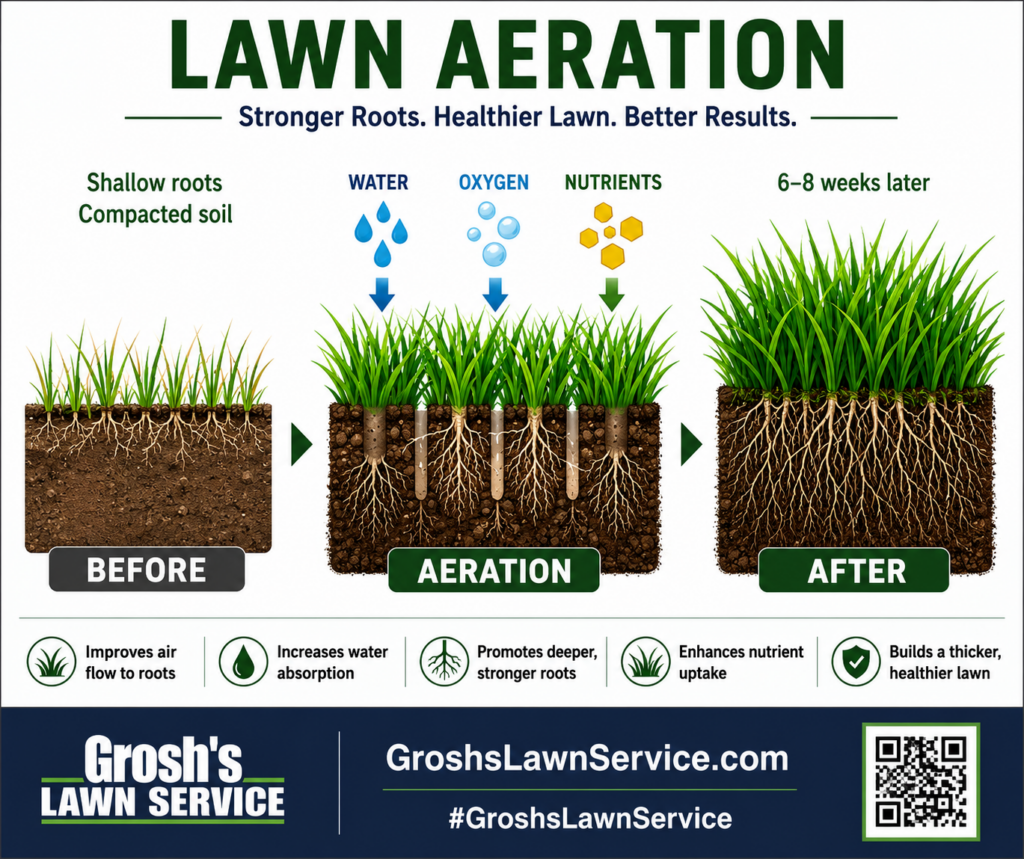
Compacted soil can prevent your lawn from reaching its full potential. Learn how our Professional Lawn Aeration Services help improve soil health and encourage stronger root growth.
3. Mow High and Mow Often
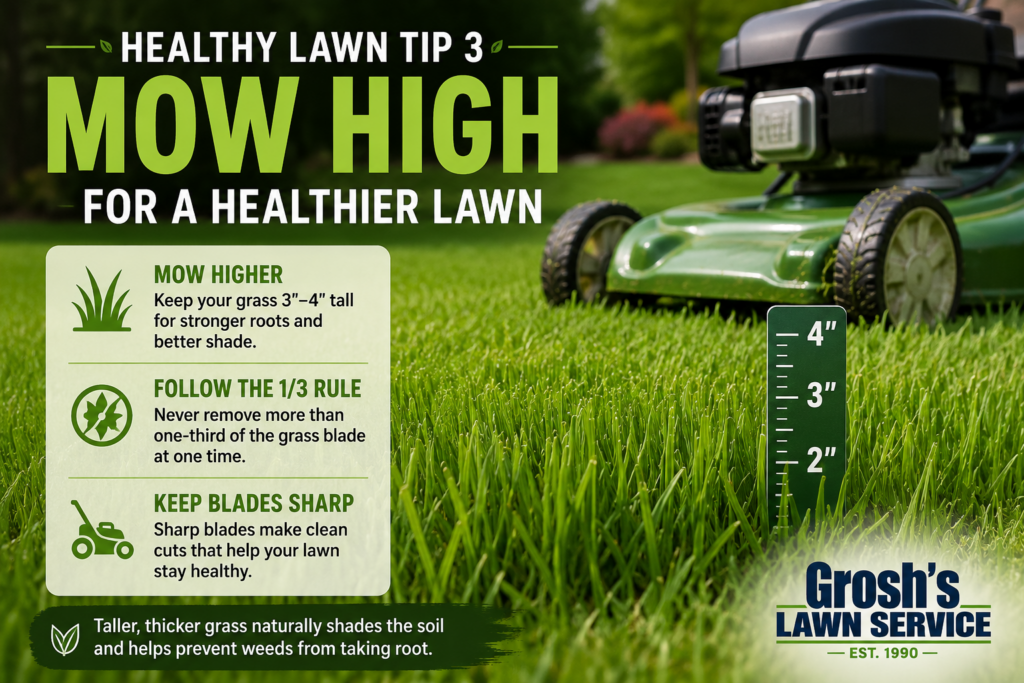
One of the simplest Healthy Lawn Tips is to mow your grass at the proper height. Cutting your lawn too short weakens the grass, exposes the soil to more sunlight, and creates ideal conditions for weed seeds to germinate. Taller grass develops a deeper root system, retains moisture more effectively, and naturally shades the soil, making it harder for many weeds to become established.
Rather than removing large amounts of grass at one time, follow the one-third rule. Never remove more than one-third of the grass blade during a single mowing. This reduces stress on the turf and encourages steady, healthy growth throughout the season.
Sharp mower blades are just as important as proper mowing height. Dull blades tear the grass instead of making a clean cut, leaving the lawn more susceptible to stress, disease, and moisture loss. Keeping your mower blade sharp helps your lawn recover more quickly after each mowing.
Good mowing practices won’t eliminate every weed, but they are an important part of natural Lawn Weed Control. Combined with proper fertilization, lawn aeration, and adequate watering, mowing correctly helps develop thicker, healthier turf that naturally resists unwanted weeds.
4. Stop Weeds Before They Become a Problem
One of the smartest Healthy Lawn Tips is to prevent weeds before they have an opportunity to take over your lawn. Once weeds mature, they compete with healthy grass for sunlight, moisture, and nutrients, making it much more difficult for your turf to thrive.
A proactive Lawn Weed Control program focuses on stopping many weeds before they germinate while treating existing weeds at the proper time of year. Combined with healthy turf management practices, preventative treatments help reduce future weed pressure and allow your lawn to grow thicker and stronger throughout the season.
Not every weed responds to the same treatment. Broadleaf weeds, grassy weeds, and sedges each require different management strategies. Identifying the type of weed and selecting the appropriate treatment at the right time often produces better long-term results than applying a general-purpose product without first understanding the problem.
At Grosh’s Lawn Service, we believe Weed Control works best when it is part of a complete lawn care program. Healthy grass, proper fertilization, lawn aeration, and timely treatments work together to create a lawn that naturally resists unwanted weeds while maintaining a beautiful appearance year after year.
Want to learn more about building a proactive lawn care program? Visit our Professional Weed Control Services page to discover how preventative treatments help develop healthier, weed-resistant lawns.
5. Water Deeply Instead of Watering Every Day
One of the most overlooked Healthy Lawn Tips is watering correctly. Frequent, shallow watering encourages shallow root growth, making your lawn more vulnerable to heat, drought, and weed invasion. Deep, infrequent watering encourages roots to grow deeper into the soil where moisture remains available longer.
Most established lawns perform better when they receive about one inch of water per week from rainfall and irrigation combined. Watering early in the morning helps reduce evaporation while giving the grass blades time to dry before evening, which may also help reduce certain lawn diseases.
A lawn with a deep, healthy root system is better equipped to withstand periods of hot, dry weather. Stronger turf also provides natural Lawn Weed Control by filling thin areas and reducing the open spaces where weed seeds can germinate and become established.
Developing healthy watering habits, combined with proper mowing, fertilization, lawn aeration, and seasonal weed management, creates a stronger lawn that stays greener and healthier throughout the growing season.

For additional research-based information on proper lawn watering, visit the University of Maryland Extension, the Penn State Extension, and the West Virginia University Extension. These trusted university resources offer practical guidance on irrigation, lawn health, and seasonal turf management.
6. Inspect Your Lawn Regularly
One of the easiest Healthy Lawn Tips is simply taking a few minutes each week to walk your lawn. Regular inspections allow you to spot potential problems before they spread, giving you a better opportunity to protect the health of your turf.
As you walk your property, look for changes in color, thinning grass, bare spots, weeds, insect activity, or signs of disease. Catching these issues early often makes them easier to manage while helping prevent larger problems from developing later in the season.
Healthy lawns change throughout the year as weather conditions, rainfall, and temperatures fluctuate. Paying attention to these changes helps you determine when your lawn may benefit from additional care, such as fertilization, lawn aeration, or professional Lawn Weed Control.
At Grosh’s Lawn Service, we encourage homeowners to become familiar with the normal appearance of their lawn. The sooner you notice something unusual, the sooner you can take the appropriate steps to restore your lawn’s health and maintain a thick, beautiful turf that naturally resists weeds.
Not sure what you’re seeing in your lawn? Visit our Professional Weed Control Services page to learn how we identify and manage common lawn weeds before they become a larger problem.
To learn more about identifying common lawn weeds and turf problems, explore the educational resources available from the University of Maryland Extension and Penn State Extension. Their research-based publications can help homeowners recognize common lawn issues and make informed maintenance decisions.

Put These Healthy Lawn Tips to Work
A beautiful lawn doesn’t happen by chance. It develops through consistent care, healthy soil, and smart maintenance practices throughout the growing season. By following these seven Healthy Lawn Tips, you can encourage deeper roots, thicker turf, and a lawn that naturally resists weeds while enhancing the beauty of your property.
Remember, every lawn is unique. Soil conditions, grass varieties, weather, and seasonal changes all influence how your lawn grows and responds to different treatments. That’s why combining proper mowing, watering, fertilization, lawn aeration, and timely Lawn Weed Control creates the best opportunity for long-term success.
At Grosh’s Lawn Service, we’ve proudly helped homeowners and businesses build healthier lawns since 1990. Whether you need help preventing weeds, strengthening your turf, or developing a customized lawn care program, our experienced team is here to help you achieve a healthier, greener lawn you can enjoy for years to come.
Want to build a healthier lawn? Learn more about our Professional Weed Control Services and discover how a complete lawn care program can help your lawn naturally resist weeds and stay healthy throughout the growing season.
Related Lawn Care Services
- Professional Weed Control Services
- Professional Fertilization Services
- Professional Lawn Aeration Services
- View All Lawn Care Services
- Read Our Customer Reviews
- Request a Free Lawn Evaluation
Helpful Lawn Care Resources
Grosh’s Lawn Service
Professional Lawn Treatment Services Since 1990
Serving Maryland, Pennsylvania & West Virginia
📞 301-842-0062
📧 Tom@GroshsLawnService.com
Helping You Build Healthier Lawns Through Education, Experience, and Professional Care.
© Grosh’s Lawn Service. All Rights Reserved.