

🌱 Professional Lawn Grub Treatment
When your lawn begins developing brown patches, thinning grass, or areas of weakened turf, the problem may be happening beneath the surface. White grubs are the immature stage of several beetle species, and they can damage lawns by feeding on grass roots below the soil.
A lawn with grub damage may gradually lose its healthy appearance as the root system is weakened. In more serious cases, damaged turf can become loose enough to lift from the soil, leaving noticeable patches and creating an opportunity for weeds to take hold.
At Grosh’s Lawn Service, we help homeowners identify the signs of lawn grub problems and determine the appropriate treatment for their property. A professional lawn grub treatment can help protect the root zone and preserve the healthy turf you’ve worked hard to maintain.
Understanding what grubs look like, recognizing the signs of damage, and treating the problem at the appropriate time are important steps toward maintaining a thicker, healthier lawn throughout Maryland, Pennsylvania, and West Virginia.
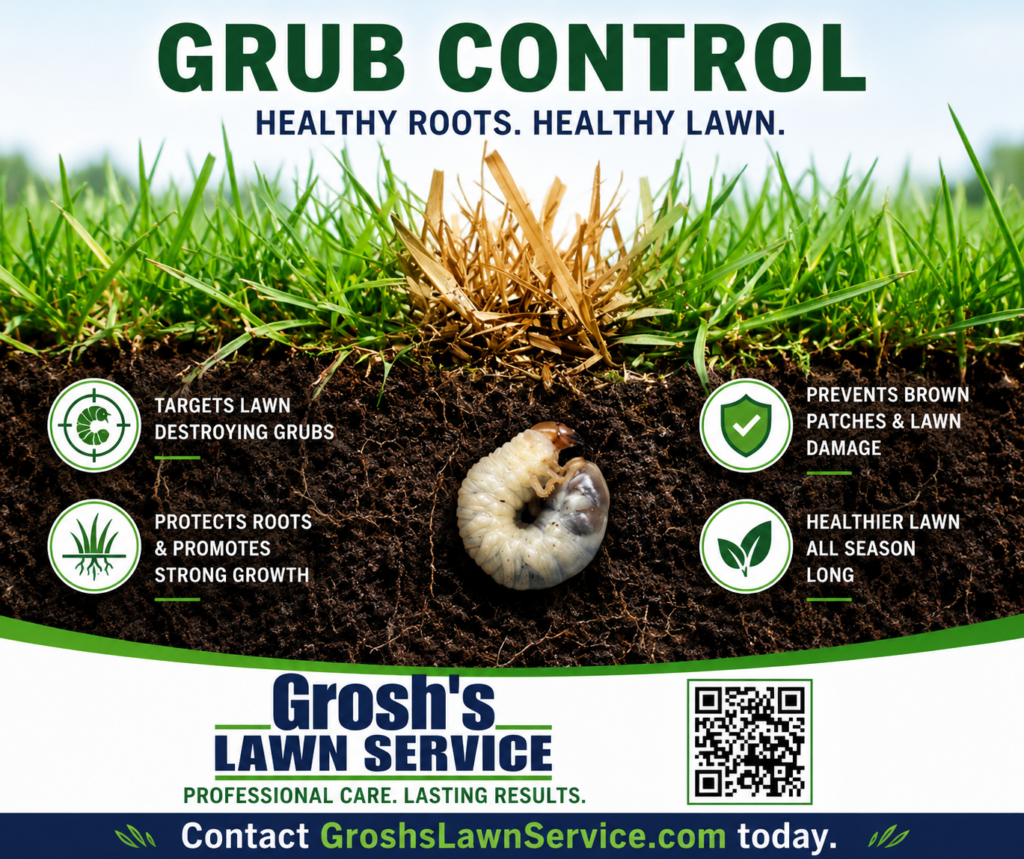
Grub damage can begin beneath the surface before homeowners notice serious problems above ground. Professional lawn grub treatment helps protect grass roots, prevent damaging brown patches, and support a healthier lawn.
🌱 What Are White Grubs and How Do They Damage Your Lawn?
White grubs are the C-shaped larvae of certain beetles that live beneath the soil surface. During their development, these larvae can feed on grass roots, weakening the turf from below and making it more difficult for the lawn to absorb water and nutrients.
Grub damage is often first noticed as irregular brown or thinning patches that don’t respond to normal watering or fertilization. As root systems become damaged, affected turf may become loose and can sometimes be lifted easily from the soil. You may also notice increased activity from birds, skunks, raccoons, or other wildlife searching for grubs beneath the surface.
Not every brown patch is caused by grubs, which is why proper identification is important before treatment. A professional evaluation can help determine whether grubs are actually responsible for the damage and whether treatment is appropriate for your lawn.
Understanding what is happening below the surface is an important first step toward protecting your grass roots and maintaining a healthier, more resilient lawn.

A professional lawn treatment being applied to a healthy residential lawn, illustrating how identifying and addressing grub problems can help protect grass roots and prevent further lawn damage.
🌱 Signs of Grub Damage: What Should You Look For?
Grub damage can be difficult to recognize at first because the problem begins beneath the surface. As grubs feed on grass roots, the lawn may gradually lose density and begin showing symptoms that can look similar to drought stress, disease, or other lawn problems.
One of the most noticeable signs is irregular brown or thinning patches that do not improve with normal watering. Damaged turf may also feel spongy or become loose enough to lift from the soil because the roots holding the grass in place have been eaten.
Increased wildlife activity can be another clue. Birds, skunks, raccoons, and other animals may dig into affected areas while searching for grubs beneath the surface. If you notice several of these signs together, it is worth investigating the soil beneath the damaged turf.
The only way to know whether grubs are responsible is to inspect the root zone and look for the larvae. Identifying the problem correctly allows the appropriate treatment to be selected and helps prevent unnecessary applications that may not address the real cause of the lawn damage.
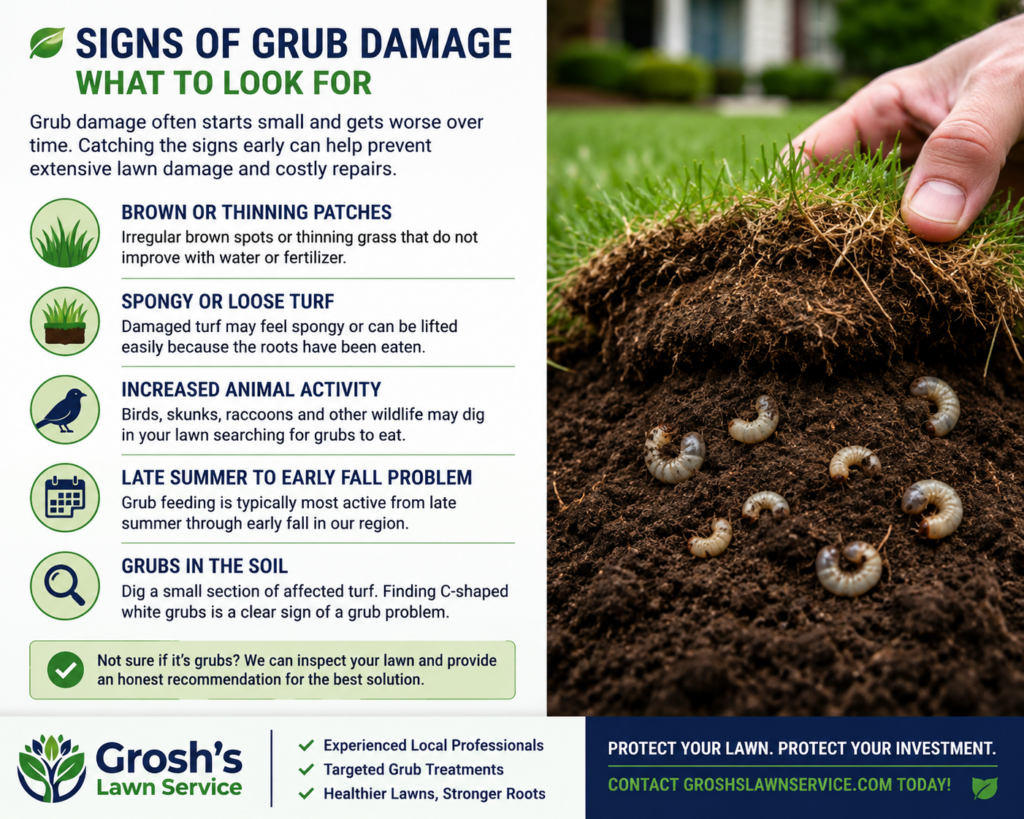
Brown or thinning patches, loose turf, increased wildlife activity, and visible white grubs beneath the soil can all be signs of grub damage. Early identification helps determine the right treatment for protecting your lawn.
🌱 When Is Lawn Grub Treatment Needed?
Timing matters when dealing with lawn grubs. The most effective treatment window depends on the type of grub, its life cycle, and when the larvae are actively feeding near the grass root zone.
In our region, grub activity is often most noticeable from late summer into early fall. This is when homeowners may begin seeing brown or thinning patches, loose turf, or increased activity from birds and other animals searching for grubs.
Treating every brown patch without first determining the cause is not a good lawn care strategy. Drought, disease, insects, soil compaction, and other problems can create similar symptoms. Proper identification helps ensure that treatment is directed at the actual problem.
At Grosh’s Lawn Service, we look at the condition of the lawn and the signs present before recommending a treatment. When a lawn grub treatment is appropriate, timely action can help protect grass roots and reduce the potential for additional turf damage.
🌱 How Professional Lawn Grub Treatment Helps Protect Your Lawn
Once grub damage has been properly identified, the right treatment can help protect the grass roots and reduce the potential for continued damage. Professional lawn grub treatment is designed to address the problem below the surface, where these root-feeding larvae can weaken the turf.
Protecting the root system is important because healthy roots provide the foundation for a strong lawn. When grass roots remain healthy, the turf is better positioned to absorb water and nutrients, recover from everyday stress, and maintain a thicker appearance.
Treatment is only one part of maintaining a healthy lawn. Proper fertilization, watering, mowing, aeration, and other lawn care practices can help keep turf strong and better able to recover from environmental stresses.
At Grosh’s Lawn Service, we focus on the condition of your lawn rather than automatically recommending a treatment. If grubs are identified as the cause of the problem, we’ll help determine the appropriate lawn grub treatment and provide professional care designed to protect your investment.
🌱 Protecting Your Lawn From Future Grub Damage
A healthy lawn starts with paying attention to changes before a small problem becomes a larger one. Regularly checking for brown or thinning patches, loose turf, and unusual animal activity can help homeowners recognize potential grub problems sooner.
Maintaining strong turf is also an important part of protecting your lawn. Proper mowing, watering, fertilization, aeration, and overseeding can help grass develop a stronger root system and recover more effectively from everyday stresses.
If you notice unexplained lawn damage, don’t assume the cause is grubs. Different lawn problems can produce similar symptoms, and treating the wrong problem can waste time and money. A professional evaluation can help determine what is actually happening beneath the surface and whether a lawn grub treatment is appropriate.
Grosh’s Lawn Service has been caring for lawns throughout Maryland, Pennsylvania, and West Virginia since 1990. Our goal is simple: identify the problem, recommend the right solution, and help you maintain a healthier lawn for the long term.
🌱 Don’t Let Grub Damage Take Over Your Lawn
Grub problems can begin quietly beneath the surface, but the damage can become increasingly noticeable as grass roots are weakened. If you are seeing unexplained brown patches, thinning turf, loose grass, or increased wildlife activity, it may be time to have your lawn evaluated.
A professional inspection can help determine whether white grubs are actually responsible for the damage and whether treatment is appropriate. Identifying the cause before choosing a treatment is an important part of responsible lawn care.
At Grosh’s Lawn Service, we take a practical approach to lawn problems. We look at the symptoms, consider the condition of your turf, and recommend the appropriate service when treatment is needed. Our goal is not simply to treat a problem, but to help protect the health and appearance of your lawn for the long term.
If you suspect grub damage, don’t wait until damaged areas become larger. Contact Grosh’s Lawn Service to discuss your lawn and learn how professional lawn grub treatment may help protect your grass.
🌱 Protect Your Lawn With Professional Care
If you suspect white grubs are damaging your lawn, the next step is finding out what is actually happening beneath the surface. Grosh’s Lawn Service provides professional lawn evaluations to help identify lawn problems and determine whether a targeted treatment is appropriate.
We believe in recommending the right care for the right problem. Our experienced team serves homeowners, businesses, and commercial properties throughout Maryland, Pennsylvania, and West Virginia with customized lawn treatment programs designed to protect grass, strengthen roots, and maintain healthier lawns.
If you are seeing brown patches, thinning grass, loose turf, or increased animal activity, don’t wait for the damage to spread. Contact Grosh’s Lawn Service today to request your free lawn evaluation and take the next step toward a healthier lawn.
Call or text (301) 842-0062, email Tom@GroshsLawnService.com, or scan the QR code to get started.

Suspect grub damage or another lawn problem? Request a free lawn evaluation from Grosh’s Lawn Service and let our experienced team help determine the right treatment for your lawn.
🌱 Build a Stronger Lawn With Complete Professional Care
Grub damage is easier to manage when your lawn is part of a complete, proactive care program. Healthy turf with strong roots is better prepared to handle heat, drought, foot traffic, insects, and other stresses that can weaken grass over time. At Grosh’s Lawn Service, we look at the whole lawn—not just the immediate problem—to help you maintain healthier, thicker turf.
Explore these professional lawn care resources to learn how our services work together to protect your lawn and improve its long-term health:
- Professional Lawn Care Treatments – Our lawn treatment programs are designed to address the specific needs of your property and provide the ongoing care your lawn needs to stay healthy and resilient.
- Professional Lawn Fertilization – Strong roots need the right nutrients. Learn how professional fertilization supports healthy grass growth, improves lawn color, and helps maintain thicker turf.
- Professional Lawn Aeration – Compacted soil can restrict the movement of air, water, and nutrients to grass roots. Aeration helps open the soil and create better growing conditions for your lawn.
- Professional Lawn Overseeding – When grub damage or other stresses leave your lawn thin, overseeding can help introduce new grass plants and restore turf density when conditions are right.
- Professional Weed Control Services – Weeds compete with desirable grass for water, nutrients, sunlight, and growing space. Professional weed control helps protect the healthy turf you have worked to establish.
- 7 Signs Your Lawn Has Compacted Soil – Learn how to recognize compacted soil and understand why problems below the surface can contribute to weak, struggling grass.
Every lawn is different. That’s why Grosh’s Lawn Service focuses on identifying the problem before recommending a solution. Whether your lawn needs protection from grub damage, improved nutrition, relief from soil compaction, new grass seed, or a more complete treatment program, our goal is to provide the appropriate care for your property.
Explore the resources above, learn more about your lawn, and when you’re ready, contact Grosh’s Lawn Service to discuss your lawn’s needs.
🌱 Trusted Resources for Understanding Lawn Grubs
Understanding what is happening beneath your lawn is an important part of responsible lawn care. White grubs are the larvae of several beetle species, and not every lawn with a few grubs requires treatment. The best approach is to identify the problem, evaluate the amount of damage, and determine whether professional treatment is actually needed.
We’ve gathered several trusted university and government resources below so homeowners can learn more about identifying white grubs, recognizing grub damage, understanding their life cycle, and making informed lawn care decisions.
- University of Maryland Extension – White Grubs in Lawn and Garden Soil – Learn how to identify different types of white grubs, recognize common symptoms of grub damage, understand their seasonal life cycle, and determine when management may be warranted. This is an especially useful resource for homeowners in Maryland.
- Penn State Extension – White Grubs: Underground Marauders in Turf – Explore practical information about white grubs in Pennsylvania lawns, including turf health practices that can help lawns better tolerate insect pressure.
- West Virginia University Extension – White Grubs – Learn about the appearance of white grubs, common symptoms of root feeding, and methods for sampling turf to determine whether grub populations may warrant treatment.
- University of Maryland Extension – Diagnose Home Lawn Problems – When a lawn develops brown or thinning areas, grubs are only one possible cause. This resource helps homeowners compare symptoms and consider other potential lawn problems before deciding on a treatment.
- U.S. Environmental Protection Agency – Lawn and Garden – Learn about Integrated Pest Management, environmentally responsible pest management, and safe practices for using pesticides when they are needed.
Good lawn care starts with identifying the problem before treating it. These resources can help you understand what may be happening beneath your turf. If you are seeing unexplained brown patches, loose grass, thinning areas, or increased wildlife activity, Grosh’s Lawn Service can help evaluate your lawn and determine whether a professional lawn grub treatment is appropriate.
Request Your Free Lawn Evaluation and let Grosh’s Lawn Service help you take the next step toward a healthier, stronger lawn.
Don’t let grub damage weaken your lawn. If you’re seeing brown patches, thinning grass, loose turf, or increased wildlife activity, the problem may be happening beneath the surface. Identifying the cause early can help protect your grass roots and prevent a small lawn problem from becoming a larger one.
At Grosh’s Lawn Service, we believe in treating the problem—not simply treating the symptoms. Our professional lawn evaluations help determine what is affecting your turf so we can recommend the appropriate lawn care solution for your property.
Whether your lawn needs a professional lawn grub treatment, fertilization, aeration, overseeding, weed control, or a complete lawn care program, our goal is to help you maintain stronger roots and a healthier lawn.
We’ve proudly served homeowners and businesses throughout Maryland, Pennsylvania, and West Virginia since 1990.
Ready to protect your lawn?
📞 Call or Text: (301) 842-0062
📧 Email: Tom@GroshsLawnService.com
🌐 www.GroshsLawnService.com
⭐ Read Our Customer Reviews
📋 Request Your Free Lawn Evaluation
Family Owned • Family Operated Since 1990
Proudly serving homeowners, businesses, and commercial properties throughout Maryland, Pennsylvania, and West Virginia.
© Grosh’s Lawn Service. All Rights Reserved.