
🐛 How to Identify Lawn Grubs Before Treating Your Lawn
If you are wondering how to identify lawn grubs, you’re not alone. Brown patches, thinning grass, loose turf, and unusual animal activity can all be signs that something is happening beneath your lawn.
Learning how to identify lawn grubs starts with recognizing the signs above ground. While brown or thinning grass can have many causes, several symptoms occurring together may indicate that something is damaging the root system.
Understanding how to identify lawn grubs can make it easier to recognize damage before significant turf loss occurs.
In this guide, we’ll look at seven warning signs that can help you determine whether lawn grubs may be affecting your property. We’ll also explain why proper identification matters before deciding whether your lawn needs professional treatment.
If you suspect grubs are responsible for damage to your lawn, identifying the problem correctly is the first step toward choosing the right solution.
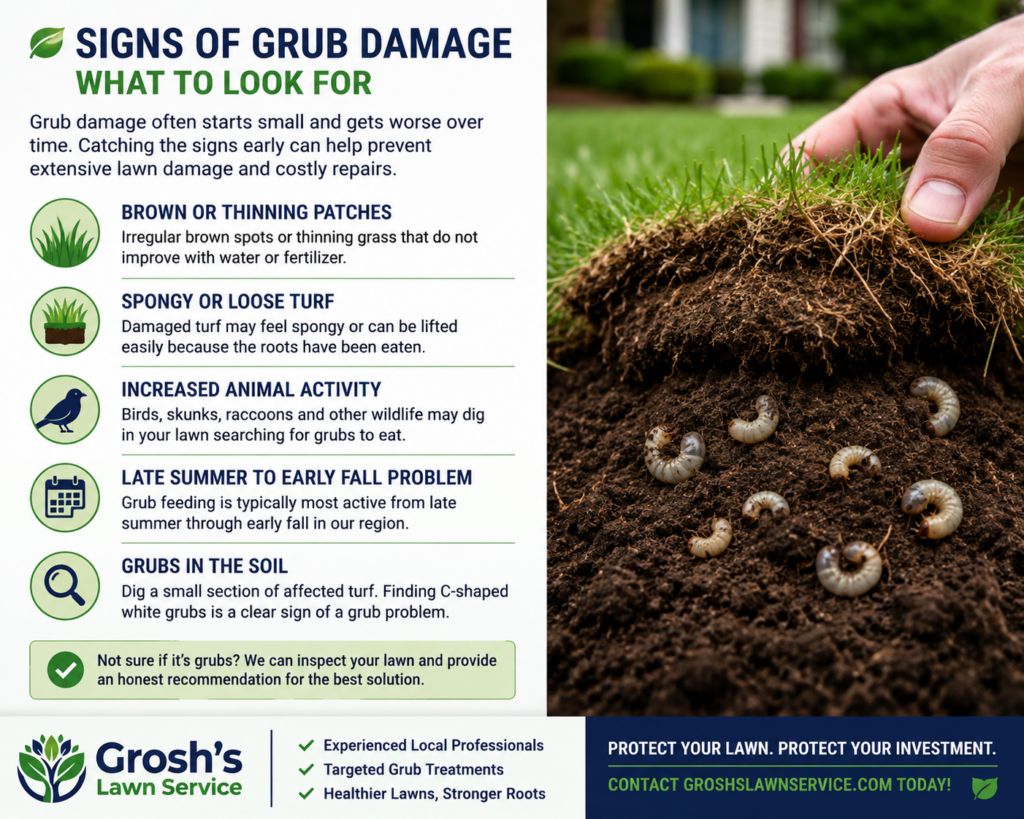
Learning how to identify lawn grubs starts with recognizing the warning signs, including brown or thinning patches, loose turf, increased animal activity, and visible white grubs beneath the soil.
🐛 Brown or Thinning Patches May Be an Early Warning Sign
One of the first clues that may help you identify lawn grubs is the appearance of irregular brown or thinning patches. Grubs feed below the surface on grass roots, so the damage often becomes visible in the turf before homeowners ever see the insects themselves.
Unlike normal drought stress, grub-related damage may appear in scattered or irregular areas rather than affecting the entire lawn evenly. The grass may gradually lose its healthy green color, become thinner, and eventually die back as the root system is damaged.
However, brown grass does not automatically mean you have grubs. Drought, lawn disease, soil compaction, insects, and other problems can create similar symptoms. That’s why looking at the condition of the turf alone isn’t enough to make an accurate diagnosis.
If brown or thinning patches continue to develop despite normal watering and lawn care, inspecting the soil and grass roots can help determine whether lawn grubs are contributing to the problem.
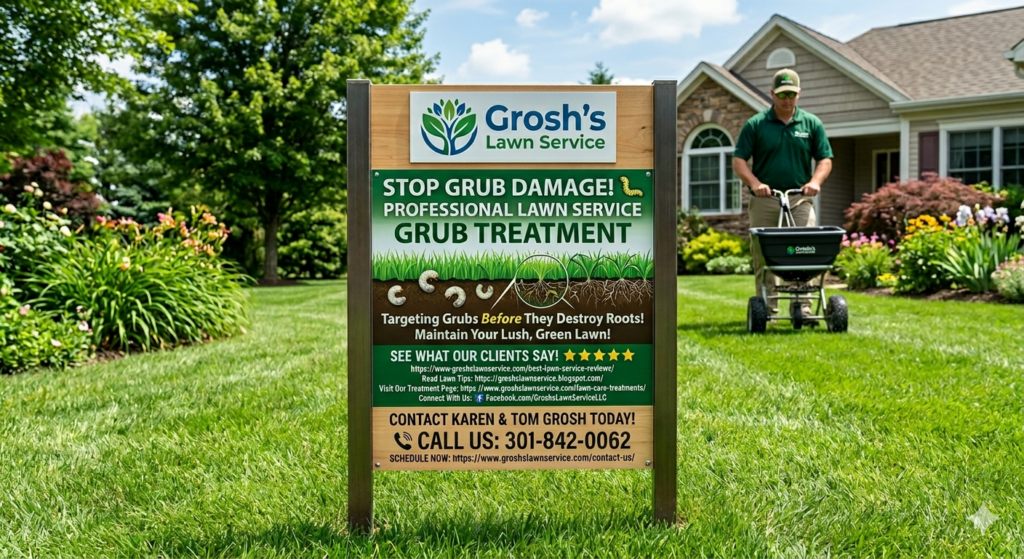
Professional Lawn Grub Treatment Application – Grosh’s Lawn Service
🐛 Loose Turf Can Be a Sign of Root Damage
Another warning sign that can help you identify lawn grubs is turf that feels loose or lifts easily from the soil. Healthy grass is held firmly in place by a network of roots beneath the surface. When grubs feed on those roots, the connection between the grass and soil can become weakened.
Try gently checking an affected area of turf. If the grass pulls away from the soil more easily than healthy areas of your lawn, take a closer look at the root zone. You may find damaged roots or, in some cases, white C-shaped grubs in the soil.
Loose turf is an important clue, but it does not prove that grubs are responsible. Other types of root damage can produce similar symptoms, which is why proper inspection is important before deciding that treatment is necessary.
If you notice loose turf along with brown or thinning patches, examining the soil beneath the affected area can help you determine what may be happening below the surface.
If you suspect grubs killing grass, look beneath the damaged turf for signs of root feeding and white C-shaped larvae.
🐛 Increased Animal Activity Can Help Identify Lawn Grubs
Another clue that can help you identify lawn grubs is unusual activity from animals searching through your grass. Birds, skunks, raccoons, and other wildlife may be attracted to areas where grubs are present because the larvae provide a food source beneath the soil.
You may notice birds spending more time in one particular area of the lawn, or you may see animals digging small holes while searching beneath the turf. When this activity occurs together with brown patches, thinning grass, or loose turf, it can be a useful reason to inspect the soil more closely.
Animal activity by itself does not confirm that grubs are present. Wildlife may be searching for other insects or food sources, so it is important to consider the overall condition of the lawn before determining the cause.
If you notice increased wildlife activity concentrated around damaged areas of your lawn, take a closer look at the soil and roots. Finding white, C-shaped larvae beneath affected turf can provide a much stronger indication that grubs are contributing to the problem.
🐛 Finding White C-Shaped Grubs Beneath the Soil
One of the clearest ways to identify lawn grubs is to inspect the soil beneath damaged turf. White grubs are typically C-shaped larvae with soft, pale bodies and a darker head. They live below the surface, where they feed on grass roots.
If you suspect grub damage, carefully lift a small section of affected turf and examine the soil and root zone. Finding grubs beneath an area of thinning or dying grass provides much stronger evidence than simply seeing brown patches or increased animal activity.
The number of grubs present also matters. Finding an occasional grub does not necessarily mean your lawn requires treatment. A professional evaluation can help determine whether the population and level of turf damage are significant enough to justify a treatment.
Because different lawn problems can look similar above the soil, proper identification is an important part of responsible lawn care. Once the cause is understood, you can make a more informed decision about how to protect and restore your lawn.
🐛 When Should You Call a Professional?
If you know how to identify lawn grubs and have found signs of possible grub activity, the next step is determining whether your lawn actually needs professional treatment. Not every lawn with a few grubs requires an application, and other problems can produce very similar symptoms.
Consider having your lawn evaluated if you notice several warning signs together, such as expanding brown patches, thinning turf, grass that lifts easily from the soil, visible root damage, or unusual activity from birds and animals.
A professional evaluation can help determine what is happening below the surface and whether grubs are contributing to the damage. It also helps prevent treating the wrong problem when drought, disease, soil compaction, or another lawn issue may be responsible.
If grubs are confirmed and treatment is appropriate, addressing the problem can help protect the remaining grass roots and reduce additional turf damage. Grosh’s Lawn Service can help you determine the right next step for your lawn.
🐛 What to Do After You Identify Lawn Grubs
Once you know how to identify lawn grubs and have confirmed that they are affecting your turf, the next step is deciding how to respond. The right approach depends on the condition of the lawn, the level of grub activity, the timing, and the amount of damage already present.
Avoid treating the entire lawn based solely on a few damaged areas or the presence of an occasional grub. A professional evaluation can help determine whether the grub population and resulting damage justify treatment and what approach is appropriate for the situation.
If treatment is recommended, protecting the remaining grass roots is an important priority. After the grub problem has been addressed, proper lawn care can help the turf recover and rebuild its strength. Fertilization, aeration, overseeding, proper watering, and good mowing practices may all play a role depending on the condition of the lawn.
Finding white grubs in lawn soil beneath damaged turf is a stronger indication of grub activity than brown grass alone.
At Grosh’s Lawn Service, our goal is to help you understand the problem first and then recommend the appropriate solution. If you’ve identified signs of lawn grubs and aren’t sure what to do next, we’re here to help.
🐛 Protect Your Lawn by Finding the Problem Early
Knowing how to identify lawn grubs can help you recognize potential damage before a small problem becomes a larger lawn restoration project. Paying attention to changes in grass color, turf density, root condition, and animal activity gives you valuable clues about what may be happening beneath the surface.
Remember that brown or thinning grass does not automatically mean grubs are present. The same symptoms can be caused by drought, disease, insects, soil compaction, poor nutrition, or other lawn conditions. That’s why identifying the actual cause is so important before choosing a treatment.
If you suspect grubs are damaging your lawn, Grosh’s Lawn Service can evaluate the affected areas and help determine the appropriate next step. When treatment is warranted, professional care can help protect grass roots and reduce further damage.
Don’t wait until damaged areas continue to spread. Early attention can help protect the lawn you already have and put you on the right path toward thicker, healthier turf.

Suspect lawn grubs? Grosh’s Lawn Service can help evaluate your lawn, identify potential damage, and determine the appropriate next step for protecting your grass.
🐛 What to Do After You Identify White Grubs in Lawn
Learning how to identify lawn grubs is an important first step, but knowing what to do next is just as important. If you’ve found signs of grub activity, the next step is determining whether your lawn actually needs treatment and what other lawn care practices may help restore damaged turf.
Grosh’s Lawn Service offers several professional lawn care services that can work together to protect and rebuild the health of your lawn. Explore these resources to learn more about the services that may be appropriate for your property:
- Professional Lawn Grub Treatment – If your lawn has confirmed grub activity, learn how professional treatment can help protect grass roots and reduce additional turf damage.
- Professional Lawn Care Treatments – Explore our broader lawn treatment services and learn how a proactive lawn care program can help maintain stronger, healthier turf.
- Professional Lawn Fertilization – Healthy grass needs proper nutrition. Learn how professional fertilization supports strong root development and helps your lawn recover from everyday stress.
- Professional Lawn Aeration – Compacted soil can make it difficult for grass roots to receive air, water, and nutrients. Aeration helps create better growing conditions for your lawn.
- Professional Lawn Overseeding – If grub damage has left your lawn thin or bare, overseeding can help introduce new grass plants and rebuild lawn density when growing conditions are appropriate.
- Professional Weed Control Services – A healthy lawn has to compete with weeds for water, nutrients, sunlight, and space. Professional weed control helps protect the turf you’re working to maintain.
Don’t guess at what’s happening beneath your lawn. If you’ve noticed brown patches, thinning grass, loose turf, or increased wildlife activity, let Grosh’s Lawn Service help you determine what may be causing the problem and what your lawn needs next.
Request Your Free Lawn Evaluation and take the next step toward protecting and improving your lawn.
🐛 Trusted Resources for Identifying Lawn Grubs
Learning how to identify lawn grubs is easier when you know what to look for beneath the surface. Brown patches, loose turf, root damage, and increased animal activity can point toward several different lawn problems, so reliable information can help you better understand what you are seeing.
We’ve included these trusted university and government resources to help homeowners learn more about white grubs, turf damage, identification, and responsible lawn care:
- University of Maryland Extension – White Grubs in Lawn and Garden Soil – Learn how to recognize white grubs, understand their life cycle, identify symptoms of grub damage, and determine when management may be appropriate for a Maryland lawn.
- Penn State Extension – White Grubs: Underground Marauders in Turf – Explore information about white grubs in turfgrass, including identification, damage symptoms, and practices that can help maintain healthier lawns in Pennsylvania.
- West Virginia University Extension – White Grubs – Learn about white grub identification, root-feeding damage, and methods for examining turf to determine whether grub populations may be contributing to lawn problems.
- University of Maryland Extension – Diagnose Home Lawn Problems – Brown or thinning grass can have many causes. This resource helps homeowners compare symptoms and consider other possible explanations before deciding on a treatment.
- U.S. Environmental Protection Agency – Lawn and Garden – Find information about responsible pest management, Integrated Pest Management, and practices that can help protect people and the environment while caring for your lawn.
Good lawn care starts with identifying the problem correctly. These resources can help you learn more about what may be happening beneath your turf, while a professional lawn evaluation can help determine what is actually affecting your property.
If you suspect lawn grubs are responsible for damage to your grass, learn more about professional lawn grub treatment from Grosh’s Lawn Service or request your free lawn evaluation.
Think you may have lawn grubs? Learning how to identify the signs is the first step, but determining the actual cause of lawn damage is even more important. Brown patches, thinning grass, loose turf, and increased wildlife activity can have several causes, and the right solution starts with a proper evaluation.
At Grosh’s Lawn Service, we help homeowners and businesses throughout Maryland, Pennsylvania, and West Virginia identify lawn problems and determine the appropriate professional care. If grubs are confirmed, our lawn grub treatment can help protect grass roots and reduce further turf damage.
We also offer professional lawn aeration, lawn overseeding, lawn fertilization, weed control, and complete lawn care treatments to help keep your turf healthy long after the immediate problem has been addressed.
Learning how to identify lawn grubs is an important first step, but identifying the actual cause of lawn damage is even more important.
Ready to find out what’s affecting your lawn?
📞 Call or Text: (301) 842-0062
📧 Email: Tom@GroshsLawnService.com
🌐 www.GroshsLawnService.com
⭐ Read Our Customer Reviews
📋 Request Your Free Lawn Evaluation
Family Owned • Family Operated Since 1990
Proudly serving homeowners, businesses, and commercial properties throughout Maryland, Pennsylvania, and West Virginia.
© Grosh’s Lawn Service. All Rights Reserved.