

Have you looked out your window lately and wondered what happened to your once-green lawn? You’re not alone. Across Maryland, Pennsylvania, and West Virginia, weeks of dry weather and temperatures nearing 100 degrees have left many lawns looking brown and lifeless.
The good news is that a brown lawn doesn’t always mean a dead lawn.
Most lawns in our region are made up of cool-season grasses, which naturally slow their growth and may enter a dormant state during extended periods of extreme heat and drought. Dormancy is the grass’s way of protecting itself until cooler temperatures and rainfall return.
Before assuming your lawn is beyond saving, it’s important to understand what heat stress looks like, how to care for your lawn during hot, dry weather, and what steps you can take now to help it recover this fall. In this article, we’ll explain why your lawn may be turning brown and share practical tips to keep it as healthy as possible through the summer months. Grosh’s Lawn Service, Summer Brown Lawn, Serving Lawn Care Maryland Pennsylvania West Virginia for 36 years.

1. Why a Summer Brown Lawn Is Nature’s Survival Plan
When temperatures climb into the upper 90s and approach 100 degrees, especially when rainfall has been scarce, your lawn goes into survival mode. This is especially true for cool-season grasses commonly found throughout Maryland, Pennsylvania, and West Virginia, such as tall fescue, Kentucky bluegrass, and perennial ryegrass.
Rather than continuing to grow and use valuable moisture, these grasses may enter a period known as dormancy. During dormancy, the grass slows its growth, turns brown, and conserves energy until cooler temperatures and adequate rainfall return. While the lawn may appear dead, the crowns and root systems are often still alive beneath the surface.
Think of dormancy as your lawn’s natural defense against extreme weather. Instead of using valuable energy to produce new growth during drought conditions, the grass focuses on protecting its root system. This built-in survival mechanism has allowed cool-season grasses to withstand hot, dry summers for generations.
It’s also important to remember that not every lawn enters dormancy at the same time. Soil type, sun exposure, grass variety, mowing practices, and available moisture all play a role. Lawns with deeper root systems or those that receive occasional rainfall or irrigation may remain green longer, while lawns growing in full sun or on shallow, compacted soils may brown much sooner.
Although a dormant lawn may not be the lush green color you’re used to seeing, it doesn’t mean it’s beyond saving. With proper care and a return to favorable growing conditions, many dormant lawns recover and green up beautifully once the stress of summer has passed.
2. How to Tell if Your Lawn Is Dormant or Dead
A Summer Brown Lawn can be discouraging, but appearances can be deceiving. Before assuming the worst, take a closer look.
One of the easiest ways to check your lawn is by performing a simple tug test. Gently grasp a small handful of grass and pull upward. If the grass remains firmly rooted in the soil, there’s a good chance the plant is still alive and dormant. If it pulls out easily with little or no root system attached, the grass may have died.
Another area to inspect is the crown of the plant. The crown is located at the base of the grass, just above the roots. Healthy crowns are typically firm and light-colored, even when the blades have turned brown. Since new growth begins from the crown, a healthy crown is an encouraging sign that your lawn can recover when growing conditions improve. Grosh’s Lawn Service, Summer Brown Lawn, Serving Lawn Care Maryland Pennsylvania West Virginia for 36 years.
Here are a few additional signs your lawn is likely dormant:
- The grass blades are brown, but the crowns remain firm.
- The lawn stays anchored in the soil when gently tugged.
- Small patches of green are still visible in shaded areas or low spots where moisture lingers.
- The lawn gradually turned brown over several weeks of hot, dry weather rather than changing overnight.
Signs that grass may be dead include brittle crowns, grass that pulls up easily with little resistance, or areas that remain brown long after cooler temperatures and consistent rainfall have returned.
If you’re still uncertain, patience is often your best ally. Many lawns that appear beyond saving during July and August surprise homeowners by greening up again after a few weeks of cooler temperatures and renewed moisture. Giving your lawn time to recover before making major decisions can save both time and money.
3. Water Wisely During Extreme Heat
If you’re caring for a Summer Brown Lawn during extreme heat, watering correctly can make a significant difference.
Instead, water deeply and less frequently so moisture reaches the root zone. Deep watering encourages roots to grow farther into the soil, where moisture remains available longer during periods of drought. A strong, deep root system is one of the best defenses against summer heat.
Early morning is the ideal time to water because temperatures are cooler, winds are typically lighter, and less water is lost to evaporation. Watering during the hottest part of the day is inefficient, while watering late in the evening can leave the lawn damp overnight and increase the risk of certain lawn diseases.
Keep in mind that many homeowners in Maryland, Pennsylvania, and West Virginia rely on private wells or may be dealing with local watering restrictions during extended dry periods. If water is limited, focus on keeping the lawn alive rather than trying to maintain a perfectly green appearance. Even occasional deep watering can help the grass survive until natural rainfall returns.
If your lawn has already gone dormant, don’t expect it to turn green overnight. A dormant lawn is conserving energy, and even with watering, it may remain brown until cooler temperatures and more consistent rainfall return. The goal is to help the grass survive the heat—not force it to grow during one of the most stressful times of the year.
A little patience, combined with proper watering practices, can help your lawn recover when summer’s extreme weather finally breaks. Grosh’s Lawn Service, Summer Brown Lawn, Proudly Serving Lawn Care Maryland Pennsylvania West Virginia for 36 years.
4. Raise Your Mowing Height During Hot Weather
One of the easiest ways to protect your lawn during extreme summer heat is to raise your mower deck. Taller grass blades provide natural shade for the soil, helping it retain moisture while keeping the root system cooler. They also reduce evaporation and help prevent the soil from drying out as quickly during long periods of hot, sunny weather.
Avoid cutting more than one-third of the grass blade at a time. Removing too much of the leaf surface places additional stress on grass that is already struggling with high temperatures and dry conditions. If your lawn has slowed its growth because of the heat, you may also find that it doesn’t need mowing as often. That’s completely normal and is another sign that the grass is conserving energy.
A sharp mower blade is just as important as mowing height. A sharp blade produces a clean cut that heals quickly, while a dull blade tears the grass, leaving ragged edges that lose moisture more rapidly and can give the lawn a brown, unhealthy appearance. Keeping your mower blade sharpened throughout the growing season helps reduce unnecessary stress on the grass.
It’s also a good idea to avoid mowing during the hottest part of the day whenever possible. Mowing in the early morning or later in the evening is generally less stressful on both the lawn and the person behind the mower.
During periods of extreme heat, remember that mowing is about maintaining the health of your lawn—not achieving the shortest cut. A slightly taller lawn is better equipped to withstand summer stress and will be in a much stronger position to recover when cooler weather returns.
5. Start Planning for Fall Lawn Recovery Now
While summer is all about helping your lawn survive, fall is when it has the best opportunity to recover and thrive. Cooler temperatures, increased rainfall, and warm soil create ideal growing conditions for repairing damage caused by summer heat and drought.
That’s why many lawn care professionals consider fall the most important season for cool-season grasses. As temperatures moderate, grass shifts its energy from surviving the heat to developing stronger roots and producing healthy new growth. The work you do in the fall often determines how your lawn will look the following spring.
Core aeration relieves soil compaction, allowing water, oxygen, and nutrients to reach the root system more effectively. Overseeding helps fill in thin or bare areas with new grass, creating a thicker, healthier lawn for the seasons ahead. If a soil test indicates your lawn needs it, a lime application can also help balance soil pH and improve nutrient availability, giving your lawn the best possible environment for long-term health.
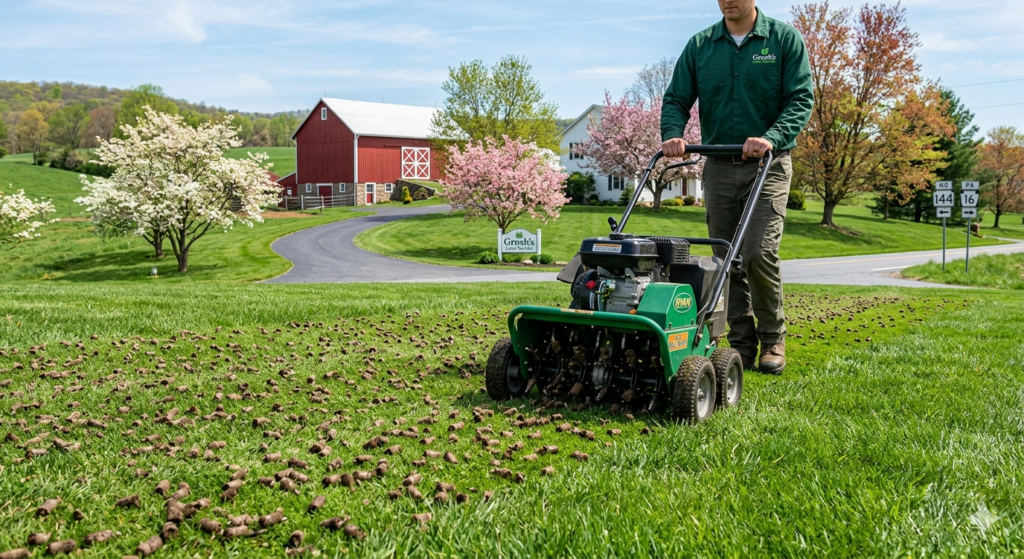
Don’t forget about your trees and shrubs. Extended periods of heat and dry weather can also stress landscape plants, making them more vulnerable to insects, disease, and environmental damage. Proper tree and shrub treatments can help protect these valuable landscape investments throughout the growing season.
Because fall provides a relatively short window for aeration and overseeding, schedules often fill quickly. Planning ahead now helps ensure your lawn receives these important services at the right time, giving it the best chance to recover from summer stress and return greener, thicker, and healthier next season. Grosh’s Lawn Service, Summer Brown Lawn, Serving Lawn Care Maryland Pennsylvania West Virginia for 36 years.
Your Lawn Can Recover with the Right Care
A brown lawn during weeks of extreme heat and dry weather doesn’t always mean it’s beyond saving. In many cases, it’s simply nature’s way of protecting the grass until cooler temperatures and much-needed rainfall return.
By watering wisely, mowing at the proper height, and avoiding unnecessary stress, you can help your lawn survive even the toughest summer conditions. Then, when fall arrives, aeration, overseeding, lime applications (when needed), and a professional lawn care program can help restore your lawn’s health and beauty.

If you’re unsure whether your lawn is dormant or has suffered permanent damage, Grosh’s Lawn Service is here to help. We’ll evaluate your lawn and recommend the best course of action to keep it healthy and looking its best throughout the year.
Ready to Give Your Lawn the Professional Care It Deserves?
⭐ See What Our Clients Say:
https://www.groshslawnservice.com/best-lawn-service-reviews/
🌿 Visit Our Website:
https://www.groshslawnservice.com/
📚 Read Our Latest Lawn Care Tips:
https://groshslawnservice.blogspot.com/
👍 Connect With Our Community on Facebook:
https://www.facebook.com/GroshsLawnServiceLLC
🌱 Learn More About Our Lawn Care Treatment Programs:
https://www.groshslawnservice.com/lawn-care-treatments/
📞 Contact Karen and Tom Grosh today to schedule your lawn care treatment program:
https://www.groshslawnservice.com/contact-us/

Family Owned • Family Operated
Copyright © All rights reserved. An official production of Grosh’s Lawn Service, Summer Brown Lawn and Lawn Care Maryland Pennsylvania West Virginia.