

🌱 Why Is My Lawn Thin?
If you’ve been asking yourself, “Why is my lawn thin?” you’re not alone. A lawn rarely becomes thin overnight. Soil compaction, drought, heavy foot traffic, aging grass, poor nutrition, insects, and disease can all contribute to a lawn losing its thick, healthy appearance.
As grass struggles to grow, bare spots begin to appear and weeds often move in to fill the empty spaces. Many homeowners assume adding more fertilizer will solve the problem, but fertilizer alone cannot replace missing grass plants or correct underlying soil issues.
The good news is that a thin lawn can often be restored. Identifying the cause is the first step, followed by the right combination of lawn aeration, overseeding, proper fertilization, and routine lawn care. Addressing these issues early helps your lawn recover faster and develop into a thicker, healthier landscape.
In this article, we’ll explore seven common reasons lawns become thinner every year and what you can do to restore a lush, green lawn.
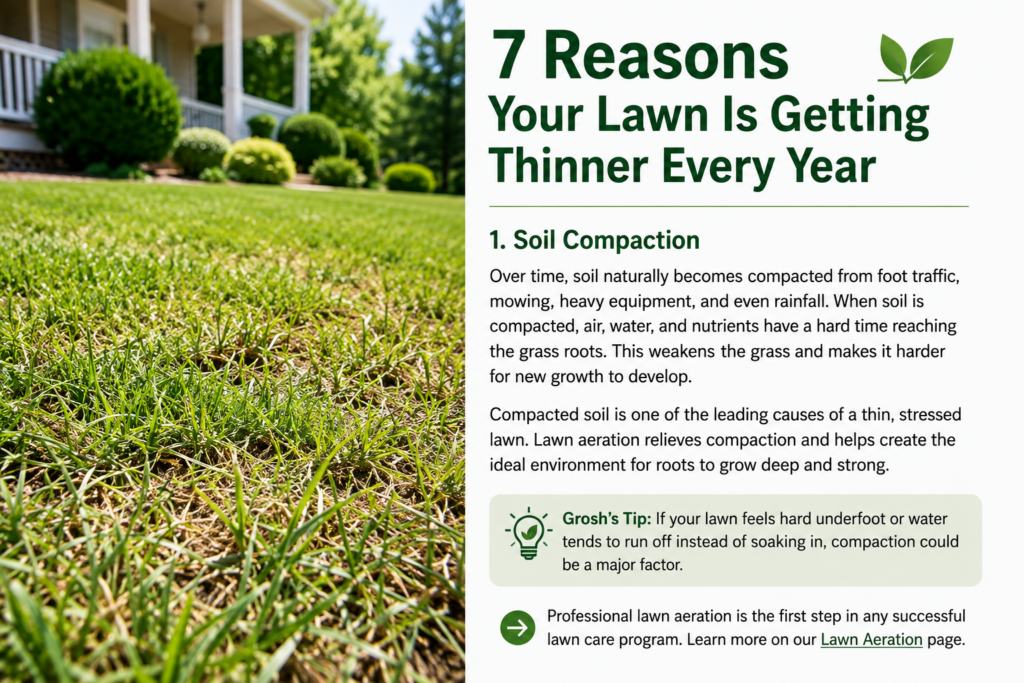
A thin lawn is often caused by soil compaction, drought, heavy foot traffic, aging grass, poor nutrition, or other environmental stresses. Understanding the cause is the first step toward restoring a thicker, healthier lawn with the right lawn care solutions.
🌱 Why Is My Lawn Thin? Soil Compaction Could Be the Cause
One of the most common causes of a thinning lawn is soil compaction. As people walk across the lawn, mow the grass, or vehicles and equipment travel over the ground, the soil gradually becomes compressed. Over time, this reduces the space available for air, water, and nutrients to reach the grass roots.
When roots cannot grow freely, grass plants become weaker and less able to tolerate heat, drought, insects, and disease. Instead of producing thick, healthy growth, the lawn begins to thin, leaving open areas where weeds can quickly establish themselves.
Professional lawn aeration is one of the best ways to relieve soil compaction. By removing thousands of small soil plugs, aeration improves the movement of air, water, and nutrients into the root zone. When followed by overseeding, the newly opened soil creates the ideal environment for fresh grass seed to germinate, helping restore a dense, healthy lawn.
If your lawn feels hard underfoot, puddles after a rain, or struggles during dry weather, soil compaction may be one of the hidden reasons your lawn is getting thinner every year.
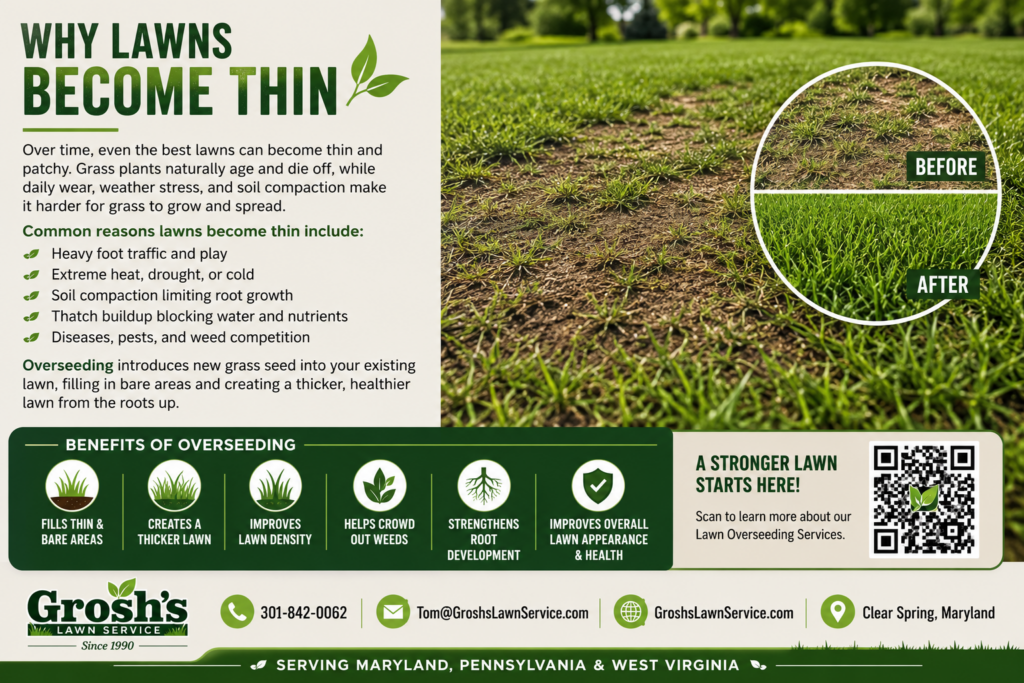
Soil compaction is one of the leading causes of a thin lawn. As compacted soil limits air, water, and nutrients from reaching the roots, grass becomes weaker and less able to thrive. Professional lawn aeration helps relieve compaction and creates healthier growing conditions.
🌱 Why Is My Lawn Thin? Poor Nutrition Can Slow Healthy Growth
Another common answer to the question, “Why is my lawn thin?” is poor nutrition. Just like any living plant, grass requires the proper balance of nutrients to grow thick, green, and healthy. When essential nutrients become depleted, grass plants lose vigor, resulting in slower growth, lighter color, and reduced turf density.
Many homeowners believe applying fertilizer once or twice each year is enough. However, every lawn has different nutritional needs depending on the grass type, soil conditions, weather, and how the lawn is used. Without a balanced lawn care program, grass often struggles to recover from heat, drought, insects, disease, and everyday wear.
Professional lawn fertilization provides the nutrients your lawn needs throughout the growing season. Combined with proper mowing, watering, lawn aeration, and overseeding when necessary, a balanced fertilization program helps produce a thicker lawn that naturally resists weeds while improving overall color and health.
If you’ve been wondering, “Why is my lawn thin?” poor nutrition may be one of the easiest problems to correct with a professional lawn care program tailored to your property’s specific needs.

A healthy, thick lawn depends on more than just grass seed. Proper fertilization, lawn aeration, and professional overseeding work together to restore lawn density and encourage strong, healthy grass growth.
🌱 Why Is My Lawn Thin? Too Much Shade Can Weaken Grass
If you’ve been asking, “Why is my lawn thin?” the answer may be as simple as too much shade. While trees add beauty and help cool your property, they also reduce the amount of sunlight that reaches your lawn. Most cool-season grasses need several hours of direct sunlight each day to grow thick and healthy.
Lawns growing under mature trees or beside buildings often become thinner because the grass struggles to produce enough energy through photosynthesis. Tree roots also compete with the lawn for water and nutrients, making it even more difficult for grass to thrive during hot, dry weather.
There are several ways to improve shaded lawns. Pruning trees to allow more sunlight to reach the turf, selecting quality grass seed designed for partial shade, and reducing heavy foot traffic can all help improve lawn health. In many cases, professional overseeding introduces newer grass varieties that perform better in lower-light conditions.
If you’re wondering, “Why is my lawn thin?” and the problem occurs primarily beneath trees or along shaded areas of your property, increasing sunlight and choosing the right grass seed may be key to restoring a fuller, healthier lawn.

Quality grass seed and professional overseeding help improve lawn density by filling thin areas and strengthening turf, even in locations where growing conditions are more challenging.
🌱 Why Is My Lawn Thin? Heavy Foot Traffic Takes a Toll
Another common reason homeowners ask, “Why is my lawn thin?” is heavy foot traffic. Whether it’s children playing, pets running, guests walking the same path, or routine mowing, repeated traffic places constant stress on grass plants.
Over time, heavily traveled areas become compacted, making it more difficult for grass roots to receive the air, water, and nutrients they need. As the soil hardens and the grass weakens, the lawn begins to thin, creating worn paths and bare spots that are often invaded by weeds.
One way to reduce this damage is by changing traffic patterns whenever possible and encouraging people to use designated walkways. Regular lawn aeration also helps relieve soil compaction caused by foot traffic, while professional overseeding fills worn areas with new grass plants to restore lawn density.
If you’ve been asking, “Why is my lawn thin?” and you notice the problem near sidewalks, patios, play areas, or other frequently used spaces, heavy foot traffic may be one of the primary causes.

Heavy foot traffic and compacted soil can wear down even healthy lawns over time. Professional lawn aeration and overseeding help restore worn areas, strengthen root systems, and rebuild a thicker, healthier lawn.
🌱 Why Is My Lawn Thin? Insects and Lawn Diseases Can Damage Grass
If you’ve been wondering, “Why is my lawn thin?” insects or lawn diseases may be part of the problem. While healthy lawns can usually tolerate minor pest activity, severe infestations or disease outbreaks can quickly weaken grass plants and create noticeable thin or bare areas.
Common lawn insects feed on grass blades or roots, reducing the lawn’s ability to absorb water and nutrients. Likewise, fungal diseases often develop during periods of excessive moisture, poor air circulation, or prolonged stress. As grass weakens, it becomes more vulnerable to additional damage from heat, drought, and heavy foot traffic.
The first step is identifying the underlying problem before applying any treatment. In many cases, improving overall lawn health through proper mowing, fertilization, watering, lawn aeration, and overseeding helps the lawn recover once the issue has been addressed.
If you’ve been asking, “Why is my lawn thin?” and the affected areas continue to expand or fail to recover, a professional lawn evaluation can help determine whether insects, disease, or another underlying issue is responsible.
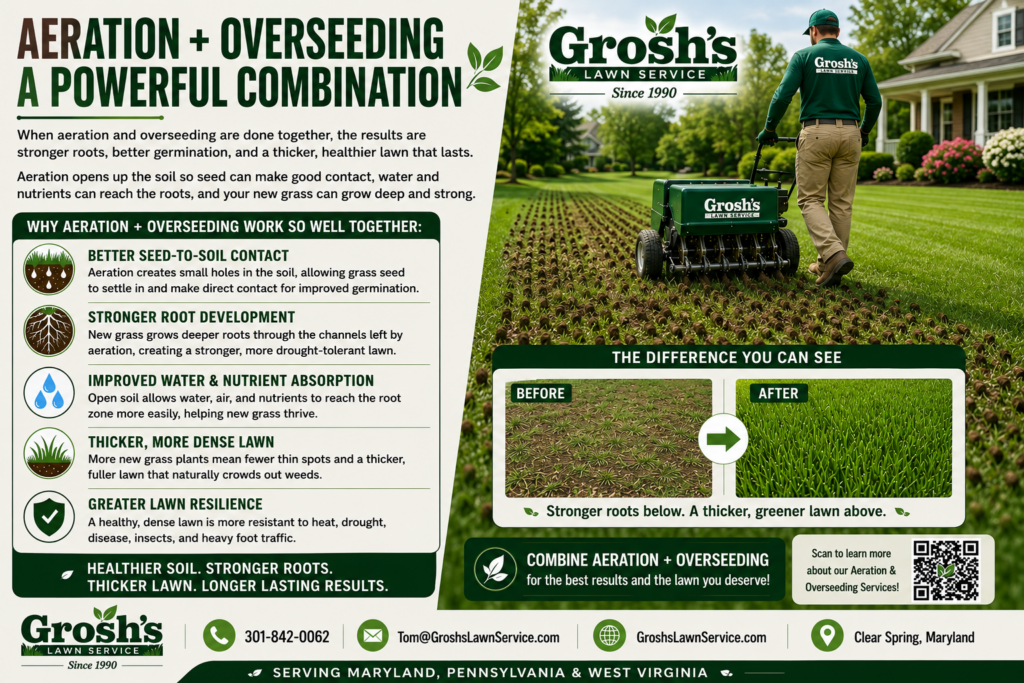
Healthy lawns are better able to recover from insect damage and lawn diseases. Professional lawn aeration and overseeding strengthen turf, improve root development, and help restore lawn density after periods of stress.
🌱 Why Is My Lawn Thin? The Right Lawn Care Plan Makes the Difference
If you’ve been asking, “Why is my lawn thin?” the answer is often a combination of factors rather than a single problem. Soil compaction, poor nutrition, excessive shade, heavy foot traffic, insects, disease, and environmental stress all work together to weaken grass over time.
The good news is that most thin lawns can be restored with a professional lawn care program tailored to your property’s needs. Lawn aeration relieves compacted soil, overseeding introduces healthy new grass plants, fertilization provides essential nutrients, and proper lawn maintenance helps protect your investment throughout the growing season.
At Grosh’s Lawn Service, we’ve been helping homeowners throughout Maryland, Pennsylvania, and West Virginia build thicker, healthier lawns since 1990. Every lawn is different, which is why we evaluate your lawn’s condition and recommend the services that will produce the best long-term results.
If you’re still asking, “Why is my lawn thin?” we’d be happy to help you identify the cause and develop a plan to restore your lawn’s health, color, and density.
Still asking, “Why is my lawn thin?” Grosh’s Lawn Service can help identify the cause and recommend the right combination of lawn aeration, overseeding, fertilization, and professional lawn care to restore a thicker, healthier lawn.
🌱 Learn How to Restore a Thin, Healthy Lawn
If you’ve been asking, “Why is my lawn thin?”, the answer often involves more than one issue. Soil compaction, poor nutrition, excessive shade, heavy foot traffic, and environmental stress can all work together to weaken your lawn over time. Fortunately, these problems can often be corrected with the right lawn care services and a proactive maintenance plan.
Explore these helpful resources from Grosh’s Lawn Service to learn how professional lawn aeration, overseeding, fertilization, weed control, and complete lawn care treatments work together to restore a thicker, greener, and healthier lawn throughout Maryland, Pennsylvania, and West Virginia.
- Professional Lawn Overseeding Services – Discover how overseeding introduces healthy new grass plants that fill thin areas, improve lawn density, and create a greener, more resilient lawn without starting over.
- Professional Lawn Aeration Services – Learn how relieving soil compaction allows air, water, and nutrients to reach the root system while creating ideal conditions for healthier grass growth.
- Professional Lawn Fertilization – See how a balanced fertilization program provides the nutrients your lawn needs to develop stronger roots, richer color, and thicker turf throughout the growing season.
- Professional Weed Control Services – Discover how controlling weeds helps reduce competition for sunlight, moisture, and nutrients, allowing desirable grass to thrive.
- Professional Lawn Care Treatments – Explore our complete lawn care programs designed to improve lawn health, strengthen turf, and keep your property looking its best year after year.
- 7 Signs Your Lawn Has Compacted Soil – Learn how to recognize one of the most common hidden causes of thinning grass and why relieving soil compaction is often the first step toward restoring a healthy lawn.
🌱 Trusted Lawn Care Resources
If you’ve been asking, “Why is my lawn thin?”, learning from trusted, research-based resources can help you better understand the factors that affect lawn health. The following organizations provide science-backed information on turfgrass management, soil health, lawn establishment, fertilization, and maintaining healthy lawns throughout the growing season.
- University of Maryland Extension – Explore research-based recommendations for cool-season lawns, fertilization, overseeding, soil improvement, and seasonal lawn care practices developed specifically for Maryland homeowners.
- Penn State Extension – Learn about lawn establishment, turfgrass selection, proper mowing, overseeding, and sustainable lawn maintenance from one of the nation’s leading agricultural universities.
- West Virginia University Extension – Discover practical lawn care guidance on healthy turf, soil management, watering, fertilization, and improving lawn performance throughout West Virginia.
- National Turfgrass Evaluation Program (NTEP) – Review independent evaluations of turfgrass varieties for color, density, disease resistance, drought tolerance, and overall lawn performance to better understand today’s improved grass cultivars.
- U.S. Environmental Protection Agency – Lawn and Garden – Find helpful information on environmentally responsible lawn care, water conservation, and maintaining healthy landscapes while protecting natural resources.
At Grosh’s Lawn Service, we believe educated homeowners make better lawn care decisions. Combining trusted research with more than three decades of professional experience allows us to recommend lawn care solutions that help homeowners throughout Maryland, Pennsylvania, and West Virginia enjoy thicker, healthier, and more beautiful lawns.
If you’ve been asking, “Why is my lawn thin?” don’t ignore the warning signs. Thin grass is often your lawn’s way of telling you that something isn’t right. Soil compaction, poor nutrition, excessive shade, heavy foot traffic, insects, disease, and other environmental stresses can all contribute to a weaker, less attractive lawn.
The good news is that most thinning lawns can be restored with the right combination of professional lawn care services. Lawn aeration, overseeding, fertilization, weed control, and a customized maintenance program work together to improve lawn density, strengthen root systems, and create a healthier landscape that you can enjoy year after year.
At Grosh’s Lawn Service, we’ve proudly helped homeowners and businesses throughout Maryland, Pennsylvania, and West Virginia build thicker, greener, and healthier lawns since 1990. If you’re wondering, “Why is my lawn thin?”, we’d be happy to evaluate your lawn and recommend the best solution for your property’s specific needs.
Ready to restore your lawn?
📞 Call or Text: (301) 842-0062
📧 Email: Tom@GroshsLawnService.com
🌐 Website: www.GroshsLawnService.com
⭐ Customer Reviews: Read Our Customer Reviews
Family Owned • Family Operated Since 1990
Proudly serving homeowners and businesses throughout Maryland, Pennsylvania, and West Virginia.
© Grosh’s Lawn Service. All Rights Reserved.